

The first journey on a new electric bike is exciting. The fifth journey is where the useful questions begin. Where does the lock live? How much battery does the return trip use? Can you arrive with a laptop, dry socks and enough enthusiasm left for the day?
An e-bike becomes genuinely useful when it fits ordinary life. That means the Tuesday with a headwind, the late finish, the forgotten gloves and the grocery stop. You do not need to become a committed cyclist overnight. You need a repeatable routine that works for you.
This first-month plan is for Irish riders who have bought an e-bike, are waiting for collection or are deciding whether the daily reality suits them. It takes you from handover to confident, measured commuting, with practical checks along the way. The days are milestones, not deadlines: repeat a stage whenever you need to.
Your month at a glance
- Before day one: confirm the bike, documents, storage and charging arrangements.
- Days one to three: learn the controls and practise somewhere appropriate and quiet.
- Days four to seven: rehearse the complete journey without a work deadline.
- Week two: try manageable commuting days and record what happens.
- Week three: solve the small irritations before buying more equipment.
- Week four: review comfort, costs, maintenance and your next steps.
Before day one: make room for the whole bike
Start with where the bike will spend the night. Measure the doorway, lift and storage area rather than relying on a generous imagination. Consider whether you will have to turn the handlebar in a corridor or negotiate stairs while carrying other belongings. A bike that fits on a website can still have a lively disagreement with an apartment landing.
Check workplace storage too. Ask whether there is a secure area, who can access it and whether overnight storage is permitted. Find out how a lock can pass through the frame and a fixed anchor. A rack that holds only the front wheel may not offer the locking arrangement you want.
If you are still choosing, make these everyday constraints part of the discussion. Browse Lifty's electric bikes with your actual storage needs in mind. A folding design may help with space, but folding does not automatically mean easy lifting. Compare the exact weight, folded dimensions and carrying method before ordering.
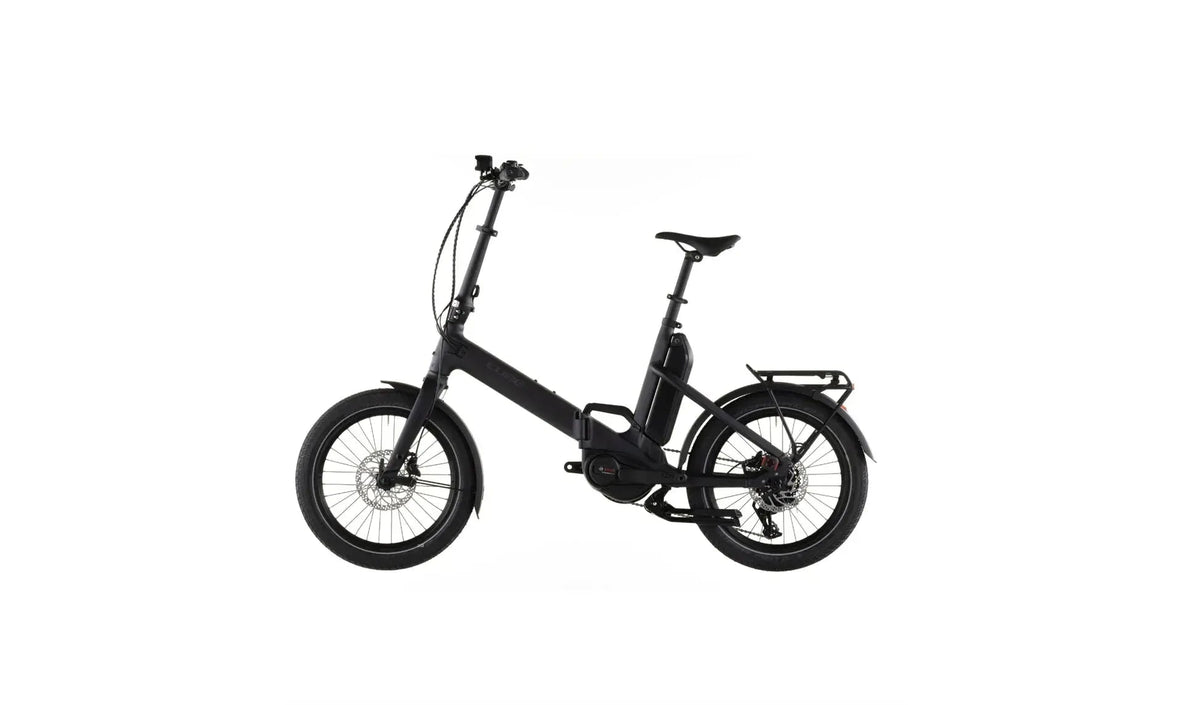
For example, Lifty lists the CUBE Fold Hybrid Comfort 545. It is worth considering where compact storage is important, subject to checking the precise version and handling requirements. For a different use case, the CUBE Reaction Hybrid ONE 600 is a mountain-bike option to compare if your riding includes suitable trails. Neither should be bought simply because the photograph looks adventurous.
Ask which commuting equipment is supplied and which needs adding. Lights, mudguards, a compatible rack and luggage can change the usefulness of a bike considerably. Confirm fitment with the exact frame and model. Do not assume a mountain bike arrives with the same everyday equipment as a city bike.
At handover: leave with answers, not just keys
Keep the receipt, exact model and variant details, frame number, battery information and relevant manuals somewhere you can find them. Photograph identifying numbers for your private records. Do not publish those records online. If the bike has keys, label the spare and store it separately from the key you use daily.
Have the controls explained before your first outing. Learn how assistance changes, how to switch the system off, how lights operate and what the display's symbols mean. Identify which lever operates each brake rather than assuming the arrangement matches your previous bicycle. Follow the supplied instructions for any walk-assist function.
Check how the battery is secured and whether it is designed for user removal. Some bikes have integrated systems that work differently from an external battery with a simple key lock. Do not force a cover, connector or retaining mechanism. A short explanation at handover is better than a damaged fitting at home.
Ask about the correct tyre-pressure guidance, adjustment limits and service recommendations for your bike. There is no sensible universal pressure or bolt-tightening figure for every e-bike. The tyre, rim, load and manufacturer instructions matter. If an adjustment needs a specified torque or a specialist tool, get the right help.
Finally, confirm how to contact the shop if something feels wrong. Agree how warranty questions and ordinary maintenance requests are handled. Keep practical details about collection, preparation and delivery separate from assumptions about what every purchase includes.
Days one to three: get comfortable with assistance
Choose an appropriate quiet place where cycling is permitted and where you can practise without traffic pressure. Begin with the lowest suitable assistance setting. Learn how gently the bike starts, how it responds when you ease off and how it feels when assistance changes. Familiarity matters more than distance.
Practise setting off, stopping, controlled turns and looking behind while keeping a steady line. Leave plenty of space. Repeat simple manoeuvres until operating the controls no longer takes most of your attention. If you feel uncertain, seek suitable instruction before tackling a busy commute.
An electric motor does not remove the need to use gears. Learn the manufacturer's shifting guidance and how your particular drivetrain behaves. Aim for smooth changes and avoid forcing an unfamiliar mechanism. The useful goal is comfortable control, rather than treating every hill as an audition for a mountain stage.
Check your riding position during short sessions. Notice whether your hands feel overloaded, whether you can reach the controls comfortably and whether mounting or dismounting feels awkward. Stop and ask about adjustments if discomfort persists. Do not keep extending the ride in the hope that pain will politely resign.
Keep this phase simple: bike, suitable clothing, the essentials and an easy route. Add luggage or a more complicated journey only once you understand the basic handling. If the bike is designed to carry passengers or larger loads, follow its specific instructions and load limits rather than extrapolating from riding it empty.
Check the Irish rules for your actual vehicle
The RSA's e-bike guidance describes the bicycle category as pedal assisted, with maximum continuous rated power of 250W and assistance cutting out when pedalling stops or at 25km/h. More powerful or motor-only machines can fall into e-moped categories with different requirements. A product name alone does not establish its legal category.
For an e-bike treated as a bicycle, follow the rules for cyclists, including traffic lights and signs. Do not ride on footpaths. The RSA states that front and rear lights must be used during lighting-up hours and darkness; it strongly recommends a helmet and high-visibility clothing. Verify the configuration you buy and avoid modifications that change its classification.
Days four to seven: rehearse the complete commute
Your route is more than a line between two addresses. It includes leaving storage, unlocking gates, crossing junctions, finding the entrance and securing the bike. Rehearse those parts on a day when being late is inconvenient rather than career-defining. Allow extra time to stop and reconsider a difficult section.
Choose a route you can manage comfortably and lawfully. A slightly longer route may suit you better than a shorter one with junctions you find intimidating. Inspect the actual conditions instead of treating a map's cycling suggestion as a promise. Roadworks, access restrictions and surfaces can change.
Try the return route as well. The same road can feel different in the opposite direction, especially where the junction layout or available cycling infrastructure changes. Think about an evening departure, and what you would do if a familiar section were closed.
Measure door-to-door time. Start when you begin getting the bike out; stop once it is locked and you are ready to enter work. Separately note riding time if you want it. Comparing only moving time with a car's entire journey gives an attractive number and an unhelpful decision.
Bring the load you expect to carry, within the bike and luggage-system limits. Check that a bag cannot reach a wheel, obscure lights or interfere with steering. Secure straps and loose items. If you carry a laptop, think about weather protection and how you will carry the bag once you park.
Make a backup plan before you need one. That might be arranging a lift, leaving the bike securely at work or using another transport option independently. If taking the bike on public transport is part of that plan, check the specific operator's current rules, service restrictions and available space first.
Week two: aim for repeatable days
Choose a manageable number of commuting days rather than promising to ride every day immediately. Start with days that have simpler schedules and lighter loads. A successful two-day pattern is more useful than five ambitious days followed by three weeks of avoiding the bike.
Prepare the evening before. Put your lock, keys, lights, suitable layers and work items in their usual places. Check the battery level. Leave enough time for an unhurried pre-ride check. Most morning delays are remarkably ordinary; your motor cannot help locate a key hiding under yesterday's post.
Record a few details after each journey: distance, start and finish battery levels, assistance used, luggage and how you felt. Note unusual wind or weather. You do not need a spreadsheet impressive enough to earn its own office. A short note on your phone will do.
Use those observations to plan charging, while keeping a sensible reserve for detours and changing conditions. A battery display is a planning aid, not a guarantee that every remaining percentage point will buy the same distance. Avoid planning a return journey that depends on using the very last of the charge.
Keep workplace charging conditional on permission and suitability. Ask before using an office socket or bringing a battery indoors. Follow the battery and charger instructions, use the specified compatible charger and keep connections dry. Do not improvise with a charger because its plug appears to fit.
Build a charging routine that suits the bike
Read the charging instructions for your exact system. They should guide temperature limits, connections, charging sequence and suitable conditions. Let a cold battery reach the manufacturer's permitted charging conditions naturally. Avoid heaters or improvised methods intended to hurry the process.
Bosch's battery-care guidance recommends room-temperature charging and storage during winter use, especially below freezing. It recommends approximately 30–60% charge for long storage. That storage advice is different from preparing for tomorrow's ride and should not be treated as a rule that all batteries must always remain half charged.
Make the charging space practical: dry, uncluttered and used according to the manufacturer's safety instructions. Do not charge equipment with visible damage, unusual heat, swelling or a suspicious smell. Stop using it and seek appropriate professional guidance. Do not open a battery pack to investigate an electrical fault yourself.
If a charging problem appears, note the exact symptoms before contacting support: displayed message, charger indication, battery level and whether anything changed recently. This information helps the workshop investigate. It does not establish which component has failed, and guessing can turn one problem into two.
Week three: fix the annoyances that stop you riding
By now, you will know which parts of the routine are irritating. Perhaps carrying a rucksack is uncomfortable, a trouser leg catches, or the lock is awkward to transport. Solve the specific problem. Buying a box of accessories before riding tends to produce a very well-equipped cupboard.
If luggage is the issue, ask about a rack and pannier arrangement compatible with your bike. Check both the carrying system and the bike's load limits. Try packing differently before buying a larger bag. Carrying only what you need can be a surprisingly effective upgrade.
If wet clothing is the problem, plan what stays at work and what travels with you. A spare pair of socks or shoes may make the routine easier. Check that clothing allows movement and does not obstruct the controls. Useful equipment earns its place by addressing something you actually experience.
If your hands, back or knees consistently hurt, seek advice about the riding position and suitability of the bike. Avoid major component changes based on a quick online diagnosis. Small adjustments may help, but persistent pain needs more care than a shopping recommendation.
If locking is taking too long, work on the storage arrangement rather than relying on a casual cable through a wheel. Choose security equipment appropriate to the bike, parking location and any insurance conditions. Ask about compatibility and use it properly; no lock should be described as theft-proof.
The small checks that belong in the routine
Before riding, check tyre condition and pressure using the guidance for your setup. Test that both brakes work as expected, lights operate and the wheels and battery are properly secured. Look for anything loose, damaged or rubbing. A change in steering, braking or electrical behaviour deserves attention before the next commute.
After a wet or dirty journey, clean gently according to the instructions. Bosch's maintenance guidance advises against high-pressure or steam cleaning and recommends care around electronics. It also warns against getting chain lubricant on disc brakes. A household pressure washer is not the quick route to a happy motor.
Do not treat this article as a substitute for the bike's maintenance schedule. Different drivetrains, brakes and suspension systems have different requirements. If something needs adjustment beyond your knowledge or tools, arrange help rather than experimenting with a safety-critical part.
Lifty's Dublin e-bike workshop page is a starting point for supported repairs and diagnostics. Confirm the work needed, compatibility, likely cost and arrangements before travelling. Repair products must be brought to the workshop at 157 Capel Street, Dublin 1; do not assume a collection service is included.
An illustrative first month: Aoife's small, useful changes
This is an illustrative scenario, not a customer testimonial. Aoife has an eight-kilometre journey to work and plans to ride three days a week. She has chosen an e-bike after checking storage and the exact specification. Her goal is simply a commute she can manage without reorganising her whole life.
In the first week, she practises on a suitable quiet route and rehearses the work journey on a day off. The shortest option includes a junction she dislikes. A longer alternative feels more manageable, so she chooses it. She records the extra distance rather than pretending the preferred route has the original mileage.
During week two, her biggest annoyance is carrying work equipment on her back. She asks about compatible luggage, confirms the load limits and changes how she packs. Her charging notes also show that she prefers charging before each commuting day. She follows her system's instructions rather than copying somebody else's battery routine.
In week three, a brake begins rubbing. She contacts the workshop, describes when the noise appears and arranges an inspection. She does not assume every noise means an expensive repair or keep adjusting things at random. The booking replaces uncertainty with a clear next step.
At the end of the month, she keeps the three-day pattern. Some days still suit another transport option better. Her success is a routine she wants to repeat, with known costs and fewer unanswered questions. There is no heroic mileage target and no invented promise that a bicycle fixes every commute.
Week four: work out what the change really costs
Keep the first month's calculation modest and transparent. Count actual trips replaced and actual costs avoided. If you still own the car, its insurance and other fixed costs do not vanish on the days you cycle. If you keep a travel pass, check whether fewer journeys actually reduce your payment.
Here is an illustrative operating-cost example, not a Lifty price quote or guaranteed saving. Assume a 16km return journey, three days each week and four weeks: 192km. Suppose each of those 12 days replaces €4 of avoidable travel spending. That creates €48 of avoided spending.
Assume four charging sessions each draw 0.6kWh at the wall, including charging losses, and electricity costs €0.35/kWh. The charging estimate is 4 × 0.6 × €0.35 = €0.84. Set aside an illustrative €10 maintenance reserve, leaving €37.16 before purchase costs, accessories, insurance or finance. Those inputs are assumptions, not measured figures or current Irish tariff averages.
The excluded costs matter. A hypothetical €1,500 purchase spread over 36 months represents €41.67 a month before financing costs or resale value. On these assumptions, operating savings alone would not cover that purchase allocation. Substitute your real figures and trip frequency rather than borrowing someone else's impressive annual saving.
If you are arranging the purchase through work, Revenue's Cycle to Work rules set limits of €1,500 for e-bikes, €3,000 for cargo and e-cargo bikes, and €1,250 for other bicycles, including related safety equipment. Your employer must pay; personal purchase followed by reimbursement does not qualify. Employer participation is optional, and the scheme is available once every four years. Check your circumstances with payroll rather than assuming a headline saving.
Lifty's Bike to Work page provides the business's quotation information. Confirm the exact bike, equipment, employer process and payable total before proceeding. This first-month plan complements that purchase process; it does not replace employer approval.
Questions new e-bike riders often ask
Should I commute every day straight away?
No fixed number suits everyone. Choose a schedule you can manage comfortably, then review it. Work hours, confidence, distance and other responsibilities matter. Repeat the rehearsal stage if necessary. Progress is having a reliable option, not earning a perfect attendance certificate.
How often should I charge?
Use the instructions for your exact battery and the evidence from your journeys. Begin with enough charge for the planned trip and a reserve. Reassess when the route, load or conditions change. A universal number of days between charges would ignore how differently people ride.
What should I buy first?
Prioritise safe, lawful use and secure storage, then address real needs. Confirm what the bike already includes. Choose compatible lights, locking equipment and luggage where needed. Avoid buying an upgrade solely because it appears in another rider's setup.
When should I contact a workshop?
Get help for changes in braking, steering, wheel security or electrical behaviour, and follow the maintenance schedule. Record the symptom and exact model. For an existing bike, Lifty's repair-service guide explains the business's support offering. Confirm the job details directly.
Make the next journey easier
At day 30, ask three questions: is the bike comfortable, is the routine practical and do I know what to do when something changes? Keep what works. Adjust the troublesome parts. If a journey remains unsuitable, use another option and revisit it when circumstances improve.
If you are still choosing, explore Lifty Electric's e-bike range with your route, storage and luggage needs ready. If you already ride, use the Dublin workshop information for your next maintenance question. Contact hello@lifty.co to discuss a specific bike or service.
Your first month does not have to be spectacular. It has to make the next trip simpler. That is how a new e-bike becomes part of everyday life, rather than another purchase waiting for the perfect weather.


