Key Takeaways: The Dublin Commute Reality
Dublin ranks among the slowest European capital cities for vehicular traffic during morning rush hours, with typical inner-suburb car journeys averaging between 14 km/h and 17 km/h. Switching to a standard 250W pedelec e-bike eliminates traffic variability and slashes annual transit expenditures by thousands of euros.
1. The Reality of Dublin Gridlock
Anyone who commutes into Dublin City Centre between 07:30 and 09:30 knows the daily frustration: journeys planned as quick 20-minute runs consistently degrade into 50 to 80-minute tests of endurance. Dublin's radial road network funnels tens of thousands of suburban vehicles toward a compact medieval core bisected by the River Liffey and bounded by the Royal and Grand Canals.
The result is systemic congestion across every primary arterial corridor in the Greater Dublin Area:
Red Cow to Blanchardstown / Airport
The M50 operates over designed capacity twice daily. A single stalled vehicle or lane obstruction near Junction 9 (Red Cow) or Junction 7 (Lucan) triggers cascading delays stretching back through Sandyford and Dundrum, trapping drivers in stop-and-go queuing while incurring automated eFlow barrier-free toll charges.
N4 Lucan to Chapelizod & Con Colbert Road
Commuters heading inbound from Lucan, Palmerstown, and Leixlip face intense friction as four lanes of dual-carriageway traffic choke into the Chapelizod bypass and the South Circular Road junction, turning a 12 km trip into a 45-to-70-minute crawl.
Swords Corridor to Drumcondra & Dorset Street
Inbound traffic from Swords, Whitehall, and Santry encounters relentless bottlenecking at Drumcondra rail bridge and along Lower Dorset Street. Bus lanes are heavily shared with turning vehicles and coaches, causing frequent schedule bunching and bus cancellations.
Grand Canal Bridges & Leeson Street Crossing
Vehicles attempting to cross from Rathmines, Ranelagh, and Donnybrook toward Dublin 2 and the Silicon Docks stack bumper-to-bumper across every canal bridge. Motorists routinely spend 20 minutes traversing fewer than 800 metres of tarmac.
Independent mobility audits routinely confirm that Dublin vehicle speeds during peak commute windows average under 16 km/h. Drivers lose an estimated 150 to 180 hours each year sitting completely stationary at red lights and tailback queues.
2. Financial Cost Comparison: Car vs E-Bike vs Public Transport
Many motorists underestimate the comprehensive financial drain of commuting by car because day-to-day spending is fragmented into separate outlays: occasional fuel station visits, automated monthly insurance direct debits, periodic toll invoices, and quarterly parking charges. When all operational expenses are accounted for across a standard 220-day working year, the true cost of driving in Dublin is staggering.
Below is the itemized balance sheet comparing a private passenger car, daily public transport via Leap Card, and a compliant 250W pedelec electric bike across an average 12 km one-way Dublin commute (24 km round trip daily, totalling approximately 5,280 commuter kilometres per annum).
| Expense Category | Private Car (Dublin Commute) | Public Transport (Leap / Bus / Luas / DART) | 250W Pedelec E-Bike (Lifty Electric) |
|---|---|---|---|
| Fuel / Energy Cost | €1,680 (Petrol/Diesel @ 8.5L/100km stop-start) | Included in fare structure | €18.50 (€0.20 per full 500Wh charge) |
| Parking (City Centre / D1 / D2) | €3,300 (€15/day avg across 220 working days) | €0.00 | €0.00 (Workplace bike cage / store) |
| Tolls (M50 Barrier-Free eFlow) | €682 (€3.10 video toll × 220 outbound crossings) | €0.00 | €0.00 (Toll-free infrastructure) |
| Insurance (Annual Comprehensive) | €950 (Dublin urban driver benchmark) | €0.00 | €0.00 (No mandatory insurance required) |
| Motor Tax & NCT / Testing | €335 (Annual tax €280 + NCT €55 prorated) | €0.00 | €0.00 (Exempt from road tax and NCT) |
| Routine Maintenance & Servicing | €750 (Tyres, brakes, annual oil service) | €0.00 | €160.00 (Lifty Labs annual tune-up & pads) |
| Public Transit Fares / Feeder Taxis | €0.00 | €1,152 (TFI 90-min fare + monthly caps) + €240 rain taxis | €0.00 |
| First-Year Vehicle Hardware Cost | Already owned or leased (€3,600+ depreciation) | €0.00 | €720 net (via 52% Bike to Work on €1,500 bike) |
| TOTAL 1ST YEAR COMMUTE EXPENSE | €7,697.00 (Excluding finance/depreciation) | €1,392.00 | €898.50 (Bike purchase + full year running) |
| SUBSEQUENT YEARS (Annual Run Cost) | €7,697.00 / year | €1,392.00 / year | €178.50 / year (Electricity + servicing) |
The €0.20 Charging Math: Powering 50 Kilometres for Pocket Change
A standard 500Wh (0.5 kilowatt-hour) e-bike battery delivers 50 to 70 kilometres of real-world pedal assistance across Dublin terrain. At current domestic Irish electricity tariffs (approximately €0.38 per kWh standard rate, or €0.18 on EV night-saver meters), a full empty-to-full recharge costs less than €0.20. Riding 24 kilometres per day for an entire working week consumes under €0.40 worth of electricity. Over a full year of 5,000 kilometres, energy expenditures remain strictly under €20.00.
Factoring in the Irish Bike to Work Scheme, which allows employees paying higher-rate tax (40% PAYE + 4% PRSI + 8% USC) to save up to 52% on a compliant e-bike up to the €1,500 statutory cap, a premium commuter pedelec retailing at €1,500 costs just €720 net via payroll deduction. In Dublin motoring terms, an e-bike literally pays for itself in fewer than 6 weeks of saved car parking, fuel, and M50 tolls.
3. Time ROI Analysis: Door-to-Door Consistency
The financial savings of switching to an electric bike are undeniable, but for most Dublin workers, the time predictability dividend proves even more valuable. In a car or on a bus, your commute duration is dictated entirely by external incidents: weather conditions, roadworks on the Quays, lane closures on the M50, and bus driver shortages.
On an EU-compliant pedelec delivering pedal assistance up to 25 km/h, your transit time is virtually identical whether it is a clear bank holiday Monday or a rain-soaked Thursday morning during school term. Cyclists utilize segregated cycle tracks, bus corridors, and park greenways, bypassing gridlock entirely.
Lucan (Foxhunter) to St. Stephen's Green (13.5 km)
Car Commute: 40 to 80 minutes in peak morning traffic via the N4 and Con Colbert Road. Searching for on-street parking adds 10 minutes.
Dublin Bus (C-Spine C1/C2): 45 to 65 minutes, plus 10 minutes walking and waiting.
250W E-Bike: 32 to 36 minutes door-to-door, using the Chapelizod bypass cycle path and Phoenix Park / North Quays cycle route. Consistency rate: 98%.
Swords Pavilions to IFSC / Grand Canal Dock (15 km)
Car Commute: 45 to 85 minutes via the M1, Port Tunnel approach, and East Wall Road.
Dublin Bus (Swords Express / Route 41): 40 to 70 minutes depending on tunnel and city centre queuing.
250W E-Bike: 38 to 42 minutes door-to-door via the R132, Santry, and the Clontarf to City Centre segregated cycleway. Zero toll costs.
Dundrum Village to Capel Street / Dublin 1 (8.5 km)
Car Commute: 35 to 60 minutes fighting tailbacks on Ranelagh Road and Canal crossings.
Luas Green Line: 22 minutes train time, plus 15 minutes walking from stops at each end (37 minutes total).
250W E-Bike: 22 to 25 minutes door-to-door via Milltown, the Dodder Greenway, and Charlemont Street directly to your desk.
Blanchardstown Centre to Silicon Docks (14 km)
Car Commute: 45 to 75 minutes via the Navan Road (N3) and Cabra, or via the M50 toll corridor.
Dublin Bus (Route 39A): 50 to 70 minutes subject to Navan Road bus corridor pinch points.
250W E-Bike: 34 to 38 minutes door-to-door along the Royal Canal Greenway and North Quays cycleway.
Reclaiming 165 Hours of Your Life Every Year
Saving an average of 45 minutes of daily transit time across 220 working days equals 165 hours reclaimed per year. That is the equivalent of more than four entire 40-hour work weeks previously wasted sitting motionless behind exhaust pipes. Commuters arrive at work invigorated by light aerobic pedal assistance, rather than stressed by near-misses and gridlock delays.
4. Multi-Modal Commuting Rules: E-Bikes vs Public Transport Regulations
Understanding Irish transit regulations is essential when planning a multi-modal commute that combines personal micromobility with rail or bus transit. Major legal and regulatory changes have reshaped what vehicles can be carried across the network:
Electric Scooters Prohibited Under NTA Regulations (October 2024)
Under National Transport Authority (NTA) regulations enacted in October 2024, all electric scooters (including compact folding models) are strictly banned from carriage across all public transport operators in Ireland: Dublin Bus, Luas, DART, Go-Ahead Ireland, Bus Eireann, and Irish Rail services.
This prohibition applies regardless of whether the scooter is folded, powered off, or stored in a carrying case. Transport operators introduced the ban citing lithium-ion battery fire safety standards across passenger carriages. If your commute depends on boarding a Luas, DART, or Dublin Bus for part of the journey, an e-scooter cannot be used for the feeder legs.
Electric Bikes: Carriage Conditions on Irish Rail & DART
Compliant 250W pedelec electric bicycles are treated under Irish transport guidelines identically to conventional pedal cycles. Permitted carriage rules include:
• DART and Commuter Rail: Standard e-bikes are permitted on DART and Dublin commuter rail lines free of charge during designated off-peak hours (outside 07:00 to 10:00 inbound and 16:00 to 19:00 outbound on weekdays, and all day Saturday and Sunday).
• Compact Folding E-Bikes: Dedicated folding e-bikes with wheels of 20 inches or smaller that fold cleanly can be carried free of charge at all times, including peak rush hours, provided they are stored securely in luggage racks without obstructing aisles or doors.
• Dublin Bus & Luas: Standard full-sized bicycles and e-bikes are not permitted on Dublin Bus or Luas trams due to space restrictions.
Road Regulations for E-Bikes and E-Scooters (S.I. 199/2024)
• Pedelec E-Bikes: Adhere to EU standard EN15194. Capped at 250W continuous rated power, motor assistance cutting out at 25 km/h, and activation strictly via pedalling (throttles restricted to 6 km/h walk-assist). No driving licence, road tax, NCT, or registration plate required. Permitted on all public roads, bus lanes, and cycle tracks (excluded from motorways).
• Road-Legal E-Scooters: Under S.I. 199/2024, e-scooters on Irish public roads must have a maximum continuous power output of 400W, a maximum speed capability of 20 km/h, a maximum weight of 25 kg, and minimum 300mm pneumatic or compliant solid wheels. They are permitted in cycle lanes and local roads, but strictly forbidden from footpaths and motorways.
5. Choosing the Right Dublin Commuter Vehicle
Matching the correct vehicle to your route profile, daily mileage, and storage situation ensures long-term reliability and comfort in Irish weather conditions:
Premium City & Trekking Pedelecs
For daily commutes of 10 to 25 km each way (e.g. Swords, Lucan, Bray, or Maynooth), look for mid-drive or high-torque hub motors (45 to 85 Nm), integrated frame batteries (400Wh to 625Wh), hydraulic disc brakes, full-coverage mudguards, and rear pannier racks. Flagship models like the CUBE Kathmandu Hybrid C:62 combine lightweight carbon construction with smooth Bosch power for effortless hill climbs and wet-weather braking.
Step-Through City Commuters
For inner-suburban routes of 5 to 12 km (e.g. Rathmines, Drumcondra, Phibsborough, Crumlin), lightweight urban e-bikes like the Fiido C11 Pro or ENGWE P275 offer low-maintenance torque-sensor drivetrains, upright ergonomic riding postures, and integrated front and rear lights, delivering exceptional value under the Bike to Work Scheme.
Compact Folding E-Bikes
If you live in an apartment without ground-floor bike storage or pair your cycle with off-peak DART and rail connections, a high-quality folding pedelec like the CUBE Fold Hybrid or Fiido D11 provides full 25 km/h electric assistance while folding in seconds to fit into a hallway wardrobe or train luggage stack.
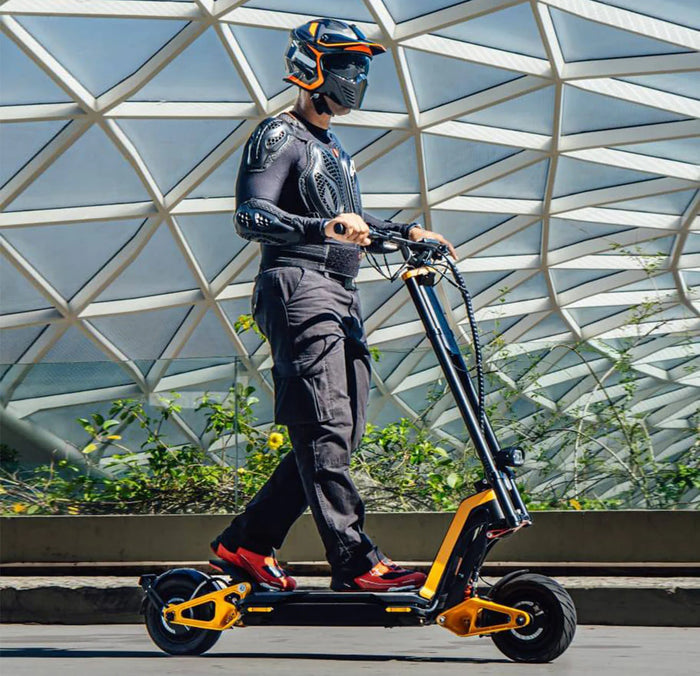
Regulation-Ready Commuter Scooters
For direct door-to-door suburban commutes that do not involve public transport connections, road-legal 20 km/h e-scooters offer an ultra-nimble, zero-pedal transit solution with minimal storage footprint.
Maximize Savings with the Irish Bike to Work Scheme
Under the national Bike to Work Scheme, your employer pays for your new pedelec e-bike and safety accessories up to €1,500 (or up to €3,000 for cargo bikes), and you repay the cost through gross salary deductions over up to 12 months. Because repayments are deducted before PAYE, PRSI, and USC, higher-rate taxpayers save up to 52% on the vehicle purchase price.
Lifty Electric provides immediate formal scheme quotations accepted by corporate employers, civil service departments, and third-party scheme voucher administrators across Ireland.