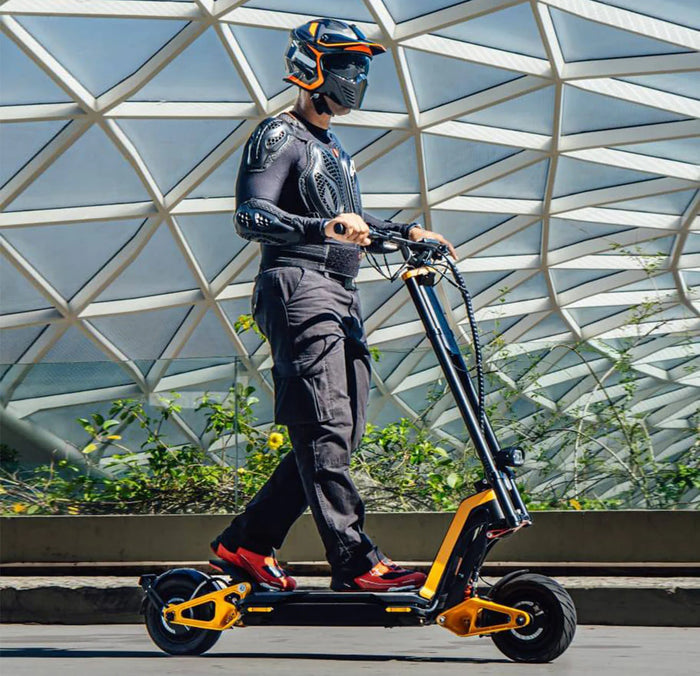
Irish winter is unforgiving on electric scooters. Between waterlogged asphalt, metal Luas tram tracks, decomposing autumn leaf sludge, and abrasive municipal road salt, riding in Dublin from October through March demands rigorous mechanical and electrical readiness.
At the Lifty Labs Dublin workshop at 157 Capel Street, our technicians diagnose and resolve winter failure modes daily. We see premature tyre blowouts, chewed-up brake pads, water-damaged electronics, and severely degraded battery packs. This technical maintenance guide lays down verified workshop procedures, candid tyre comparisons, braking overhauls, IPX6 weatherproofing standards, and critical battery safety rules.
Inner Tube Fitting
€59.99 Fitted
Solid Conversions
€99 Single / €149 Set
IPX6 Weatherproofing
€199 Full Seal
Workshop Intake
157 Capel St Drop-Off
1. The Impact of Irish Winter Roads on Electric Scooters
Winter commuting across Dublin presents physical hazards that differ substantially from dry summer conditions. Small-diameter scooter wheels (8.5 inches to 11 inches) possess limited gyroscopic stability and minute contact patches. When road conditions deteriorate, mechanical margin for error disappears.
Wet Asphalt & Surface Water
Rain forms a continuous water barrier between rubber and pavement, reducing mechanical friction by up to 40%. Braking distances double instantly. Surface pooling also conceals sharp road debris, shattered glass, and sunken potholes beneath deceptively shallow puddles.
Luas Tram Tracks
Steel Luas tram rails (frequent crossings along Capel Street, Abbey Street, and College Green) become frictionless when wet. Crossing tracks at shallow angles catches the front wheel inside the flangeway groove, precipitating sudden falls. Always cross rails perpendicularly at a 90-degree angle with zero lean and no throttle.
Autumn Leaves & Road Salt
Rotting autumn leaves create a slick organic film comparable to black ice. Later in the season, gritters spread municipal road salt across Dublin streets. The resulting brine penetrates motor axle seals, corrodes caliper pivot pins, and accelerates galvanic corrosion across bare aluminum and steel fasteners.
Cold-Weather Battery Drop
Lithium-ion chemistries (18650 and 21700 cells) experience heightened internal resistance when ambient temperatures drop between 2°C and 7°C. Riders will observe immediate voltage sag under throttle, translating into an expected 20% to 30% reduction in real-world commuting range.
2. Puncture Solutions Compared: Tubes, Tubeless, Solids & Self-Healing
Punctures represent over 60% of daily workshop intake at Lifty Labs. Selecting the right tyre setup requires balancing puncture immunity against ride quality, braking traction, and vehicle longevity. We evaluate all four available options objectively below.

Lifty Labs Workshop: Solid Tyre Fitting Bench

Lifty Labs Workshop: Self-Healing Polymer Tyre Demo
Pneumatic Inner Tube Replacement (€59.99 Fitted)
The Benchmark for Ride Quality: Standard pneumatic setups use a separate inner tube encased within an outer tyre casing. At Lifty Labs, an inner tube repair includes comprehensive wheel removal, rim deburring (smoothing sharp factory manufacturing edges), rim tape inspection, valve alignment, high-pressure bead seating, and exact inflation.
Pros: Superior bump absorption, maximum traction on wet tarmac, low rolling resistance, and protective compliance for suspension linkages and wheel bearings.
Cons: Highly susceptible to "pinch flats" (snakebite punctures) if tyre pressures drop below 45 PSI. Requires weekly pressure checks with a gauge.
Tubeless Tyre Repair & Sealant (€59.99)
The Mid-Weight Standard: Found on contemporary commuter and performance scooters (such as Segway Ninebot Max and Teverun models), tubeless tyres eliminate the inner tube entirely. The tyre carcass forms an airtight seal directly against the rim flange. Lifty Labs cleans the rim bead, installs vulcanised internal patches or specialist plugs, replaces damaged valve cores, and seats the bead with high-pressure air.
Pros: Zero risk of pinch flats, lower rolling resistance, and higher resistance to small penetrations when combined with liquid tyre sealant.
Cons: Requires an airtight, undamaged wheel rim. Striking a deep Dublin pothole can dent the alloy rim bead, resulting in sudden pressure loss.
Solid Tyre Conversion (€99 Single / €149 Set)
Complete Puncture Immunity: Solid rubber or cellular honeycomb tyres contain no air chamber. Once installed, punctures from road debris, glass, and nails are physically impossible. Zero maintenance and zero pressure checks required.
Lifty Labs strictly restricts solid tyre conversions to scooters operating at or below 50 km/h. We do not install solid tyres on high-speed dual-motor performance machines (such as Dualtron Thunder, Rovoron S7, or Teverun Fighter Supreme). Solid tyres transmit extreme high-frequency road vibrations directly into axle bearings, suspension bushings, motor magnets, and electronic controller solder joints. On high-speed vehicles, this creates dangerous rim-slippage risks and severely degrades wet cornering grip.
Pros: 100% puncture proof. Ideal for daily delivery riders and low-speed commuters who cannot tolerate roadside delays.
Cons: Noticeably firmer ride, harsher impact transfer into your knees and back, and approximately 20% less mechanical grip on cold, wet Dublin asphalt.
Self-Healing Tubeless Tyres (€99.99 Single / €149 Set)
The Ultimate Modern Solution: These premium pneumatic tyres feature a factory-applied 4mm internal layer of high-viscosity polymer sealant compound. When a nail or glass shard punctures the tread, the pressurised sealant instantly wraps the foreign body and hermetically seals the void as the object is ejected.
Pros: Retains full pneumatic cushion, supple ride comfort, and exceptional wet-road grip, while autonomously neutralizing penetrations up to 4mm to 5mm diameter.
Cons: Marginally heavier rotational mass; requires regular valve maintenance to prevent sealant gumming.
| Solution | Puncture Risk | Wet Grip & Ride Comfort | Speed Restriction | Workshop Fitted Price |
|---|---|---|---|---|
| Pneumatic Inner Tube Standard tube inside tyre | Moderate (prone to pinch flats if under-inflated) | Excellent grip, plush road cushion | No restriction (all speeds) | €59.99 fitted |
| Tubeless Tyre Repair Plugged or patched carcass | Low to Moderate (bead must stay true) | High grip, responsive handling | No restriction (all speeds) | €59.99 repaired |
| Solid Tyre Conversion Rubber / honeycomb core | Zero (100% puncture proof) | Firm ride, 20% lower wet grip | Strictly ≤ 50 km/h | €99 single / €149 set |
| Self-Healing Tubeless Internal polymer memory layer | Extremely Low (auto-seals up to 5mm) | Plush pneumatic ride, maximum wet grip | No restriction (all speeds) | €99.99 single / €149 set |
3. Braking Safety: Pads, Bleeding & Hydraulic Conversions
Winter water, road grit, and leaf grime form an aggressive abrasive slurry on disc brake rotors. Brake pads that survive an entire dry summer can deteriorate down to bare metal backing plates within just a few weeks of daily wet commuting.
Brake Pad Replacement
€59.99 / €99
€59.99 single wheel / €99 front and rear set.
Includes rotor degreasing, caliper cleaning, piston reset, installation of heavy-duty semi-metallic or ceramic compound pads, and calliper alignment.
Hydraulic Brake Bleeding
€50 / €99
€50 single system / €99 dual front & rear.
Purging entrapped air bubbles and moisture contamination from fluid lines, refilling with fresh mineral oil or DOT fluid, and restoring crisp lever bite.
Hydraulic Brake Conversion
€Quote by Model
Full conversion from mechanical cables.
Eliminates stretching cables and seized winter housings. Delivers up to 50% less hand fatigue and effortless progressive one-finger stopping power.
Why Hydraulic Disc Brakes Win in Dublin Winter
Mechanical disc brakes rely on a braided steel cable sliding inside a flexible outer housing. In winter, salty road spray enters the housing ends, creating internal cable drag, slow return action, and a wooden lever feel.
A sealed hydraulic brake conversion (utilizing systems such as Magura MT5e, Zoom, or NUTT with integrated electronic motor cut-off sensors) transfers braking energy through incompressible fluid. You achieve instant bite, effortless modulation on slick road markings, and zero cable maintenance throughout the wet season.
4. Winter Weatherproofing: IPX5 vs Stage 2 IPX6 Japanese Super Sealant
Most production electric scooters leave the factory with basic IPX4 water resistance (suitable only for minor vertical splashes). Dublin rain is wind-driven and continuous, accompanied by heavy tyre spray forced directly into deck seams and cable entry ports. Lifty Labs provides two professional tiers of workshop sealing.
Stage 1 IPX5 Sealing (€99)
Focuses on external water ingress points: deck perimeter sealing, external wire harness grommet treatment, front and rear lighting housing perimeter gaskets, and display bezel sealing.
Target Protection: Defends against low-pressure water spray from any direction, allowing comfortable riding in light-to-moderate rain.
Stage 2 IPX6 Japanese Super Sealant (€199)
Comprehensive workshop disassembly of chassis and deck. Application of specialised Japanese industrial elastic silicone sealant across controller enclosures, phase wire penetrations, charging port flaps, and internal battery bay barriers.
Target Protection: High-pressure water jet resistance (tested against heavy road wash and standing spray) to secure delicate microelectronics.
Lifty Labs strictly caps weatherproofing ratings at Stage 2 IPX6. We strictly never claim IPX7 (temporary immersion up to 1 meter), IPX8 (continuous immersion), or "100% waterproof" status. Electric scooters are precision motorized electronics with wheel hub motors, axle bearings, and charging sockets. No scooter is a submarine. Submerging a scooter in deep standing water or flooded road dips will inevitably breach seals and destroy electronic components.
5. Battery Health Advisory: Preservation & Workshop Safety Doctrine
The battery pack represents 50% to 70% of an electric scooter's total value. Protecting this asset during Irish winter is both an economic necessity and a vital fire safety consideration.
Lifty Labs Battery Doctrine: Diagnostics & OEM Replacements Only
Strict Safety Protocol: Lifty Labs strictly does not offer battery cell rebuilding, cell repacking, or internal battery modifications. Lithium-ion packs require automated precision factory spot-welding, cell resistance binning, and rigorous thermal management. Unofficial cell rebuilding creates catastrophic thermal runaway and fire risks.
What Lifty Labs Delivers: High-precision electronic diagnostic testing, BMS voltage balancing assessments, discharge load tests, connector overhauls, and direct certified OEM battery pack replacements sourced from authorized vehicle manufacturers.
Four Winter Battery Rules for Dublin Commuters
- Never charge a freezing battery: When arriving home from a wet 3°C commute, bring the scooter indoors and allow the battery pack to warm to room temperature (15°C to 20°C) for at least 60 to 90 minutes before plugging in the charger. Charging cold cells causes internal lithium plating, permanently diminishing battery capacity and creating internal short circuits.
- Maintain 40% to 70% charge if parked: If you suspend riding during the coldest winter weeks, store the scooter in a dry indoor space at approximately 50% to 70% state of charge. Storing a battery at 0% in freezing ambient temperatures will cause voltage to drop below cutoff thresholds, permanently killing the pack.
- Gentle throttle on cold mornings: For the first 1 to 2 kilometers of your ride, accelerate moderately. Drawing heavy peak current from cold cells causes severe voltage sag and places unnecessary strain on the battery management system.
- Dry charging ports thoroughly: Always inspect the rubber charging port flap. Ensure moisture, water drops, and road grit are thoroughly dried before inserting the charger pin to prevent connector arcing.
6. Lifty Labs Intake Policy & Workshop Logistics
Lifty Labs operates as the dedicated mechanical and electrical workshop department of Lifty Electric in Dublin 1. To maintain diagnostic accuracy and customer safety, we maintain strict intake rules.
Workshop Location & Drop-Off
157 Capel Street, Dublin 1, D01 F5P1.
Customer intake is conducted exclusively in-person at our central Dublin showroom and workshop. Every scooter is visually assessed and logged with initial technician notes during handover.
Intake Hours & Schedule
Tuesday to Friday: 13:00 to 17:00
Saturday: 12:00 to 17:00
Sunday & Monday: Closed (Workshop Dark)
Typical turnaround: 2 to 3 working days depending on parts availability.
Lifty Labs strictly does not accept postal intake, courier deliveries, or send-in packages. All repair, diagnostic, and servicing work requires the vehicle to be dropped off and collected in person at 157 Capel Street, Dublin 1.
Book Your Dublin Workshop Assessment
Whether your scooter has suffered an unexpected puncture, requires a solid tyre conversion, needs fresh brake pads, or requires Stage 2 IPX6 Japanese Super Sealant before winter rain sets in, book your workshop slot online before dropping into Capel Street.