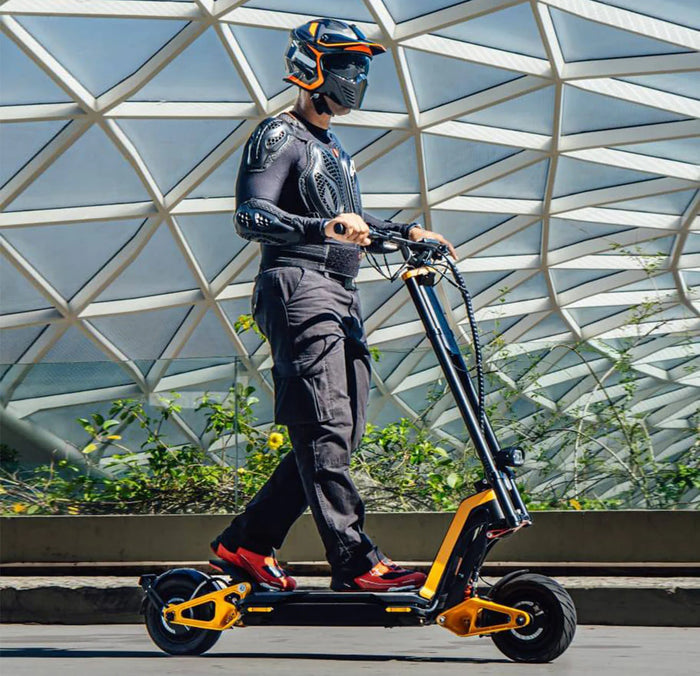
Dublin's commute is a mix of footpaths, Luas stops, DART carriages and office lobbies. A foldable electric scooter that works in all four of those environments is a very specific machine. This guide covers what Dublin commuters actually need to check before buying a folding e-scooter in 2026 — and why the InMotion Air Pro D at €599.99 and 18 kg is the most practical foldable in Lifty Electric's current catalogue.
foldable electric scooters is best approached by matching the scooter to the complete journey, not by chasing one headline number. The useful fold is the one you can operate safely, carry without strain and store without blocking a hallway, office or shared transport space. This guide uses current Lifty catalogue examples, practical workshop thinking and the latest Irish public-road rules so you can build a shortlist with fewer surprises.
Quick answer
Measure the storage space, set a realistic carry-weight limit and inspect the hinge, secondary lock, folded balance and cable routing. For mixed-mode trips, compactness and dependable folding often matter more than performance extras.
- Test the full lift, not only the folding motion.
- The hinge and latch require inspection as wear develops.
- Folded dimensions matter in lifts, offices and car boots.
- A lighter scooter with local support can be more useful than a heavier feature-rich model.
Three useful facts before you compare
- Battery watt-hours are voltage multiplied by amp-hours, which makes watt-hours more useful than amp-hours alone when comparing different-voltage packs.
- Cold, hills, wind, tyre pressure and rider load can all reduce real-world range compared with a laboratory claim.
- Irish public-road legality depends on the exact scooter’s certified power, weight and design speed—not simply its brand or a speed mode selected in an app.

Folding mechanism and mixed-mode travel
A folding mechanism is a safety component, not merely a convenience feature. Check how the latch closes, whether there is a secondary lock and whether the stem has play when the brake is held and the handlebars are rocked gently. Repeated folding introduces wear at contact points, so inspect the hinge and fasteners regularly. A compact folded shape is useful only if cables are not crushed and the scooter can be carried without the deck swinging open. For frequent mixed-mode travel, quick and predictable folding often matters more than headline power.
Weight, stairs and everyday handling
Weight affects almost every ownership moment that happens away from the road. A scooter that feels stable while moving may be awkward on stairs, in a hallway, through a train station or into a car boot. Published weight should include the battery, but confirm that with the seller. Try to imagine the full journey rather than the smoothest section. If lifting is unavoidable, handle position and folded balance can matter as much as the number on the specification sheet. A few extra kilograms are worthwhile only when they deliver a benefit you genuinely use.
Deck, handlebars and rider fit
Deck room, handlebar width and stem height affect confidence more than many buyers expect. A cramped stance makes it harder to shift weight smoothly, while handlebars that are too low can encourage a tense posture. Shoe size, reach and riding position are personal, so a short test or careful measurement is valuable. Heavier or taller riders should also check the manufacturer’s maximum load with a margin for clothing and luggage. The best fit allows relaxed elbows, stable feet and easy access to brake controls without stretching or changing grip.
Tyres, pressure, grip and puncture trade-offs
Pneumatic tyres use air to absorb vibration and usually provide better grip and comfort on rough surfaces. Solid tyres remove the risk of punctures but can transmit more shock into the rider and scooter, especially on broken tarmac. Larger diameter and wider profiles generally roll over defects more calmly, although compound, pressure and construction still matter. Keep pneumatic tyres at the manufacturer’s recommended pressure; under-inflation encourages pinch punctures and wastes energy, while excessive pressure reduces the useful contact patch. Compatibility must be confirmed before any tyre conversion.
Braking control and maintenance
Braking quality is about control, maintenance and balance rather than the number of brake components listed. Mechanical discs are familiar and serviceable, hydraulic systems can offer strong modulation, and electronic braking may add useful support, but no system replaces regular inspection. Look for predictable lever feel, straight discs and pads with usable material. A heavier rider, steep route or wet commute increases the importance of thermal capacity and correct setup. After transport or assembly, test braking at walking pace before progressing to normal use, and book a workshop inspection if there is pulsing, scraping or fading.
Comfort over a full commute
Comfort is not an indulgence when the scooter is used repeatedly. Vibration contributes to hand fatigue, loose fasteners and a feeling of instability. Tyre construction, deck space, grips, stem stiffness and suspension work together, so no single feature guarantees a smooth ride. A ten-minute test over representative ground reveals more than a long specification list. Riders should remain able to look ahead, signal where appropriate and brake without shifting into an awkward position. A comfortable setup encourages calmer decisions and makes it easier to detect when handling changes.
Preparing for Irish weather
Irish conditions reward equipment that works when plans meet drizzle, wind and dirty road spray. Mudguards should control spray without rubbing the tyre, grip surfaces should remain useful when damp, and controls should be operable with gloves. Cold weather can reduce temporary battery performance, while headwinds raise energy use. Salt and grit should be wiped away before corrosion takes hold. Store the scooter in a dry, moderate environment rather than a freezing shed or hot car. Weather readiness is a combination of design, preparation and maintenance, not a single badge.
Water resistance in Irish conditions
Water resistance is not the same as waterproofing. An IP rating describes tested protection for particular components and conditions; it is not permission to ride through flooding, pressure-wash a scooter or ignore damaged seals. Ratings may differ between the deck, display and battery, so check the exact model documentation. Dry the scooter after wet journeys, keep the charge port clean and closed, and never charge when connectors may be wet. Water damage can appear later as corrosion or intermittent faults. Sensible wet-weather habits remain essential even when a product page uses the word waterproof.
Locking and storage strategy
Security begins with where and how long the scooter will be left. A small cable lock is light but provides little resistance to common tools; a quality U-lock or heavy chain usually offers a stronger primary barrier when it fits through a structural point. Avoid locking only around a removable wheel or folding stem. Choose a visible, fixed anchor and keep the lock away from the ground where it is easier to attack. Record the serial number, retain proof of purchase and consider indoor storage. No lock is unbeatable, so reduce unattended time wherever possible.
What range means in the real world
Range claims are best treated as a comparison tool, not a promise. Laboratory figures usually assume a light rider, moderate speed, level ground, mild weather and a new battery. Irish wind, repeated starts, hills and cold cells all increase consumption. A sensible buyer plans around a conservative usable range and keeps a reserve for diversions. If a normal return trip is 20 km, choosing a scooter whose realistic range is comfortably above 20 km is better than buying a model that only reaches that figure in ideal conditions.
Parts and workshop support
Parts and workshop support are part of the purchase price. Tyres, tubes, brake pads, bearings, chargers and folding components wear, and specialist labour may be needed for electrical diagnosis. Before choosing a model, check whether common parts are stocked and whether a technician can access service information. Imported bargains can be hard to repair when connectors, displays or controllers are unusual. Lifty’s Dublin workshop can assess faults, compatibility and repair economics. Planned checks cost less than riding until a small wobble, puncture or rubbing brake becomes a larger failure.
The true cost of ownership
Compare total ownership cost rather than ticket price alone. Add a suitable lock, helmet, lights, possible delivery, routine service and likely tyre or brake work. A product with stronger parts support can be better value than a cheaper model that becomes unusable after one failure. Electricity cost is usually modest, but battery replacement is significant. Also consider the value of your time: frequent punctures or an awkward carry can outweigh a small saving. Keep a maintenance reserve and choose on the basis of dependable use, not the largest specification number available for the budget.
A one-minute safety routine
A useful pre-ride routine takes less than a minute: squeeze both brakes, check tyre condition and pressure, confirm the folding latch, test lights and bell, and look for loose parts or damaged cables. Stop if steering changes, the battery swells, the charger becomes unusually hot, or there is a new electrical smell. Wear a correctly fitted helmet and use high-visibility elements. Build skill in a controlled area before mixing with traffic. Good equipment cannot compensate for poor visibility, excessive speed or an unroadworthy scooter.
Public-road rules to verify
For public-road use in Ireland, the Road Safety Authority says an e-scooter must have a maximum continuous rated output of 400 W or less, maximum design speed of 20 km/h or less, maximum weight of 25 kg including batteries, wheels at least 200 mm in diameter, and required lights, reflectors, brakes, bell and manufacturer’s plate. Riders must be at least 16. Higher-power, heavier or faster models are not legal on public roads. Always confirm the exact supplied unit; a product family name or software speed setting is not proof of compliance.
Current Lifty examples to use as reference points
These examples show how price, format and specification can vary. They are not a declaration of public-road compliance. Confirm the exact unit, intended use, stock and current product data before ordering.
E-TWOW GT SL Electric Scooter
A compact commuter reference for comparing portability, but public-road compliance of the exact D-labelled unit still requires confirmation. The current listed price is €899, subject to change. Read the complete product page and ask Lifty to confirm suitability for your route and intended use.
Xiaomi Electric Scooter 4 Pro
A mainstream reference for balancing folded size, weight, range and familiar service needs. The current listed price is €799.99, subject to change. Read the complete product page and ask Lifty to confirm suitability for your route and intended use.

Dualtron Aminia Special Electric Scooter
A compact Dualtron reference; check exact weight, latch design and Irish public-road compliance before purchase. The current listed price is €799, subject to change. Read the complete product page and ask Lifty to confirm suitability for your route and intended use.

Irish public-road checklist
For public-road use in Ireland, the Road Safety Authority says an e-scooter must have a maximum continuous rated output of 400 W or less, maximum design speed of 20 km/h or less, maximum weight of 25 kg including batteries, wheels at least 200 mm in diameter, and required lights, reflectors, brakes, bell and manufacturer’s plate. Riders must be at least 16. Higher-power, heavier or faster models are not legal on public roads. Always confirm the exact supplied unit; a product family name or software speed setting is not proof of compliance.
The RSA also says riders must be 16 or older, obey the 20 km/h speed limit, avoid footpaths and pedestrianised areas, carry neither passengers nor goods, and not hold or use a mobile phone. Read the RSA e-scooter guidance before riding. Rules and individual product specifications can change, so this article is practical buying guidance rather than legal advice.
How to compare two finalists
A useful buying process starts with the real journey: distance, surfaces, gradients, storage, carrying and lawful riding. Write those needs down before comparing models. Then remove any option that fails a non-negotiable requirement, such as weight, support or compliance. Only after that should range, styling and extra features decide the shortlist. This prevents a common mistake—buying the most dramatic specification and then discovering it is difficult to carry, unsupported locally or unsuitable for public roads. The best scooter is the one that fits the full week, not one exciting test ride.
Make a simple scorecard with five columns: lawful intended use, realistic range, carry and storage, braking and comfort, and parts or service support. Give each model a score only after verifying the underlying specification. If one option wins only because of an unverified range or power claim, leave that claim out and compare again. This method is deliberately less exciting than buying on impulse, but it produces a scooter that is more likely to fit daily life.
Questions to ask before buying
- What is the exact continuous rated motor output, design speed and complete weight including the battery?
- What realistic range should a rider of my weight expect on my gradients and in cooler weather?
- Are tyres, tubes, pads, charger and battery available locally?
- What warranty applies, who performs the work and what is excluded?
- Can I lift, fold, store and secure it during every part of my normal journey?
- Does the exact unit carry the required manufacturer’s plate and safety equipment for my intended use?
Frequently asked questions
What weight is truly portable?
It depends on stairs, distance and grip position. Test a lift with one hand only if that reflects real use, and remember that awkward balance can make a moderate weight feel much heavier.
Can I bring a folded scooter on public transport?
Operator rules can differ and may change. Check the current operator policy before travelling and never obstruct doors, aisles or accessible spaces.
How often should the folding joint be checked?
Include it in every pre-ride glance and follow the manufacturer’s maintenance interval. Any new play, clicking or incomplete engagement deserves attention before riding.
Is a folding hook a security point?
Usually not. Lock through a structural part recommended by the manufacturer, because many hooks and accessories can be removed or cut.
One more practical check
Listen as well as look during a test. A quiet, consistent machine makes new rattles, rubbing or bearing noise easier to spot. Clicking under load can indicate a loose fastener or worn interface; scraping may point to a brake disc or mudguard; knocking at the stem or suspension deserves inspection. Do not mask a mechanical symptom with lubricant unless the service instructions call for it. Early diagnosis protects both safety and resale value. Video of a repeatable noise can help a workshop understand when it occurs, but it does not replace physical inspection.
One more practical check
Use only a charger confirmed for the exact battery voltage, connector polarity and charging profile. A plug that fits is not evidence of electrical compatibility. Charge on a hard, clear surface away from escape routes, inspect cables and connectors, and avoid charging a wet or visibly damaged scooter. Let a very cold or hot battery return toward room temperature first. Unusual heat, smell, swelling, sparks or repeated cut-outs require immediate disconnection when safe and professional assessment. Do not open lithium battery packs unless properly trained and equipped.
Battery capacity, cells and future replacement
Battery capacity is normally expressed in watt-hours, calculated from voltage multiplied by amp-hours. Watt-hours give a better basis for comparison than amp-hours alone because two packs can share the same amp-hour figure while operating at different voltages. Capacity is only one part of the story: cell quality, battery-management protection, charge cycles and replacement availability matter over several years. Ask whether a replacement pack can be sourced and fitted safely. A cheaper scooter becomes expensive quickly if its battery is proprietary, unsupported or difficult to diagnose.
Suspension without the marketing fog
Suspension can reduce harsh impacts and help tyres maintain contact over uneven ground, but it adds weight, moving parts and maintenance. Travel length alone does not describe quality; spring rate, damping, geometry and rider weight decide whether a system feels controlled. Too soft can pitch under braking, while too stiff delivers little comfort. Riders on rough roads should value stable steering and appropriate tyres alongside suspension. Inspect pivots and fasteners for play, and treat new knocking or uneven rebound as a reason to stop and check the scooter rather than continuing to ride.
Load rating and safety margin
Maximum load is a structural and performance limit, not a recommended everyday target. Running continuously at the ceiling can reduce acceleration, climbing performance and range while increasing demand on tyres, brakes and suspension. Include the rider, clothing, lock and any permitted carried items when estimating load. For durability, choose a model with a useful margin above normal combined weight. Never assume that a powerful motor automatically means a stronger frame. Confirm the declared load with the exact model specification and avoid carrying passengers; Irish rules also prohibit passengers on public-road e-scooters.
Torque, gradients and heat
Hill performance depends on total load, motor control, battery voltage under demand, tyre grip and how long the climb lasts. Peak wattage is a marketing figure and does not by itself predict sustained climbing. A scooter can surge strongly for a few seconds yet overheat or slow on a long gradient. Dual motors may improve traction and output on private land, but many high-power models do not meet Irish public-road limits. Match the machine to the lawful use case, and remember that descending the same hill places serious demand on brakes and rider technique.
Lights, reflectors and being seen
Being seen is part of the equipment choice. Irish public-road rules require front and rear lights, reflectors and a bell, but legal minimums should be treated as a baseline. Lights need useful placement and battery life, not just impressive lumen claims. Reflective clothing and a bright helmet can improve conspicuity, especially in rain or low winter sun. Check that a backpack or coat does not hide the rear light. Carrying a small backup light is sensible for long evenings, and every pre-ride check should include both lights, reflectors and the audible warning device.
Safe charging habits
Use only a charger confirmed for the exact battery voltage, connector polarity and charging profile. A plug that fits is not evidence of electrical compatibility. Charge on a hard, clear surface away from escape routes, inspect cables and connectors, and avoid charging a wet or visibly damaged scooter. Let a very cold or hot battery return toward room temperature first. Unusual heat, smell, swelling, sparks or repeated cut-outs require immediate disconnection when safe and professional assessment. Do not open lithium battery packs unless properly trained and equipped.
Start with the journey, not the spec sheet
A useful buying process starts with the real journey: distance, surfaces, gradients, storage, carrying and lawful riding. Write those needs down before comparing models. Then remove any option that fails a non-negotiable requirement, such as weight, support or compliance. Only after that should range, styling and extra features decide the shortlist. This prevents a common mistake—buying the most dramatic specification and then discovering it is difficult to carry, unsupported locally or unsuitable for public roads. The best scooter is the one that fits the full week, not one exciting test ride.
What new noises can reveal
Listen as well as look during a test. A quiet, consistent machine makes new rattles, rubbing or bearing noise easier to spot. Clicking under load can indicate a loose fastener or worn interface; scraping may point to a brake disc or mudguard; knocking at the stem or suspension deserves inspection. Do not mask a mechanical symptom with lubricant unless the service instructions call for it. Early diagnosis protects both safety and resale value. Video of a repeatable noise can help a workshop understand when it occurs, but it does not replace physical inspection.
Final verdict
The best folder disappears neatly into the parts of your day when you are not riding. Prioritise a secure hinge, manageable carry, practical storage and support.
Ready to compare properly? Explore Lifty Electric’s scooter collection, or book advice or workshop support in Dublin. Tell the team your route, rider weight, storage limits and intended use so they can help narrow the options.
Ride smart,
Lifty Electric Team