THE DUBLIN COMMUTER EQUATION: 14 CENTS A DAY VS GRIDLOCK AGONY
It is 8:42 AM on a Tuesday morning at Heuston Station. Rain is drifting off the Liffey, Dublin Bus services on the quays are backed bumper to bumper from Parkgate Street all the way to O'Connell Bridge, and motorists are staring down fifty minutes of first-gear clutch exhaustion to reach Grand Canal Dock. Meanwhile, a compliant electric scooter glides along the segregated quayside cycle track at a steady 20 km/h, delivering the rider to their office desk in exactly fourteen minutes.
The Bottom Line: Charging a compliant 368 Wh battery in Dublin costs exactly €0.10 at current electricity tariffs. An Irish-certified commuter e-scooter completely replaces a €96 to €145 monthly Leap Card, paying for its entire hardware cost in three to five months while freeing you permanently from traffic chaos.

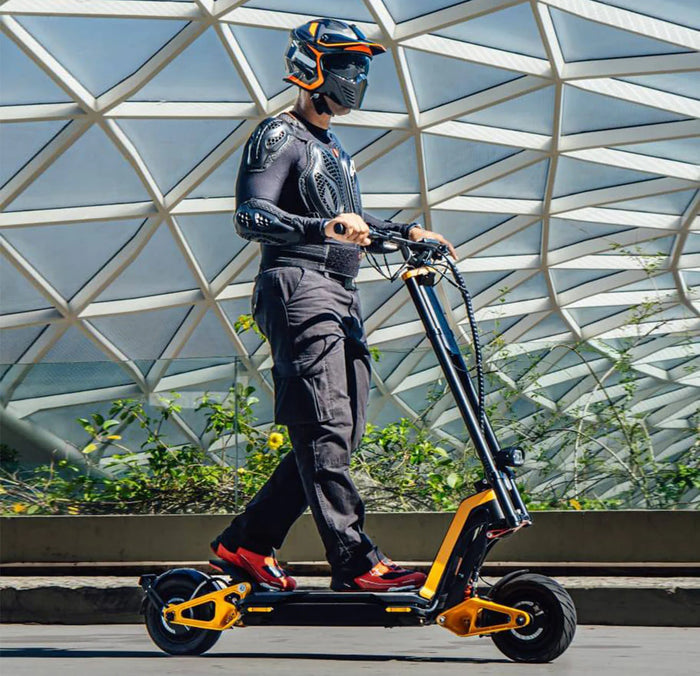
Figure 1: Irish-spec road-legal electric scooter configured with tamper-proof 20 km/h speed limiter and 400W nominal motor.
THE QUAYSIDE SPRINT: NAVIGATING PEAK-HOUR DUBLIN REALITIES
Anyone who has attempted to commute across Dublin between 8:00 AM and 9:15 AM knows that transport time estimates provided by mapping applications are fiction. Dublin's radial road network funnels traffic from the north, west, and south into narrow choke points along the River Liffey, the Grand Canal, and the inner orbital routes. Whether you are driving an SUV, sitting on an idling double-decker bus, or crushed against the glass doors of a packed Red Line Luas, peak-hour Dublin mobility is defined by stop-and-go friction.
Let us examine two classic daily Dublin commuter trajectories where personal electric mobility fundamentally changes the mathematics of daily life:
TRAJECTORY 1: HEUSTON STATION TO GRAND CANAL DOCK (THE QUAYS CORRIDOR)
Covering approximately 4.8 kilometres from Heuston Station past the Four Courts, O'Connell Bridge, the Custom House, and across the river into the Silicon Docks, this is Ireland's premier commuter artery. In a car or taxi during peak morning rainfall, this journey routinely takes between 42 and 55 minutes. You spend forty minutes with your foot on the brake pedal or feathering the clutch, inhaling diesel exhaust, and watching cyclists and delivery riders pass you by the hundreds. Upon arrival in Grand Canal Dock, you face commercial multi-storey parking rates running from €18 to €25 per day.
On public transport, catching the Red Line Luas from Heuston to George's Dock or Connolly Station involves fighting onto trains that are already at capacity from Tallaght and Saggart, followed by a fifteen-minute walk across the river. Factoring waiting times and platform congestion, door-to-door transit time hovers around 35 to 40 minutes.
By road-legal electric scooter, the entire trajectory changes. Utilising the continuous cycle corridors along the North Quays, the dedicated contra-flow lanes, and the segregated Samuel Beckett Bridge crossing, the distance is covered in 14 minutes flat at a sustained 20 km/h cruising pace. You arrive without sweat, without waiting on platforms, and with your transport machine folded neatly beside your work desk.
TRAJECTORY 2: PHIBSBOROUGH TO THE IFSC
Taking a 3.2-kilometre cross-city route from Phibsborough down Constitution Hill, past Mountjoy Square, or down Dorset Street toward the International Financial Services Centre (IFSC) is a notorious bottleneck. Roadworks, delivery vans blocking bus lanes, and four-way signalised junctions at Beresford Place can turn a three-kilometre drive into a 35-minute test of patience.
On a commuter e-scooter, connecting through Royal Canal Greenway spurs and dedicated bus lanes drops the travel time to approximately 10 to 11 minutes. You avoid the heavy stop-start wear on mechanical drivetrains, sidestep traffic queues completely, and know with mathematical precision exactly what time you will arrive at your meeting.
| Commute Mode | Heuston to Grand Canal Dock | Phibsborough to IFSC | Monthly Direct Cost | Daily Schedule Reliability |
|---|---|---|---|---|
| Private Car | 45–55 minutes | 30–40 minutes | €420–€600 (fuel + parking) | Poor (highly erratic in rain) |
| Dublin Bus / Luas | 35–42 minutes | 25–35 minutes | €96–€145 (Leap Card cap) | Moderate (dwell & crush delays) |
| Road-Legal E-Scooter | 14 minutes | 10 minutes | €2.80–€3.50 (charging) | 99% Predictable |
The critical Dublin variable is reliability. A bus schedule can be thrown into disarray by a single double-parked delivery truck on Dame Street. A personal light electric vehicle gives you total autonomy over your calendar.
RSA REGULATIONS DEMYSTIFIED: THE S.I. NO. 199/2024 LEGAL PLAYBOOK
For years, Irish e-scooter riders operated in legal limbo. Under historic statutes dating back to the Road Traffic Act 1961, electric scooters technically met the definition of a mechanically propelled vehicle (MPV), meaning they required road tax, a motor driving licence, and motor insurance: none of which were legally obtainable from insurance underwriters or motor tax offices.
That changed decisively with the enactment of the Road Traffic (Electric Small Transporters) Regulations 2024 (Statutory Instrument No. 199 of 2024). This comprehensive statutory framework officially legalised compliant e-scooters across the Republic of Ireland, establishing unambiguous technical limits for vehicles and clear behavioral rules for riders.
THE FOUR ESSENTIAL HARDWARE BOUNDARIES
To be classified as an "electric small transporter" under Irish law, a scooter must satisfy every one of the following four criteria straight out of the box:
- 400W Maximum Nominal Motor Power: The motor must have a continuous rated power output of 400 watts or less. High-output motors (e.g. 800W, 1,000W, or dual 1,200W drivetrains) fail this test automatically.
- 20 km/h Maximum Assisted Speed: The scooter's electric propulsion must strictly cut off at 20 km/h (12.4 mph). Scooters programmed for 25 km/h (standard European speed) or higher do not comply unless flashed with certified Irish/German 20 km/h firmware.
- 25 kg Maximum Curb Weight: The total unladen weight of the scooter, including its battery pack, must not exceed 25 kilograms. Heavy dual-stem suspension machines weighing 30 kg to 45 kg are legally barred from public roads.
- 200 mm Minimum Wheel Diameter: Wheels must measure at least 200 mm (approximately 7.87 inches) in diameter. Standard 8.5-inch and 10-inch commuter wheels easily clear this threshold.
EXPLICIT LEGAL PERMISSIONS: WHERE CAN YOU ACTUALLY RIDE?
Under S.I. 199/2024, compliant electric scooters are treated in road traffic law similarly to pedal cycles. This grants riders explicit access to core urban transport infrastructure:
- Dedicated Cycle Tracks and Cycle Lanes: Fully legal. Riders are legally expected to use cycle tracks where provided.
- Bus Lanes: Fully legal. Riders may use bus lanes sharing space with scheduled buses, taxis, and cyclists unless a specific local sign indicates otherwise.
- General Carriageways: Fully legal on standard public roads subject to the general rules of the road.
STRICT STATUTORY BANS: WHAT WILL GET YOU FINED
The regulations established strict prohibitions accompanied by €50 fixed-charge penalty notices:
- Pedestrian Footpaths: Strictly banned. Riding on a footpath is an automatic offense. You must dismount and push your scooter when moving along pedestrian walkways.
- Pedestrian Plazas and Zones: Banned during active pedestrian hours. Areas like Henry Street, Grafton Street, and the pedestrianised section of Capel Street require riders to dismount.
- Motorways and Dual Carriageways with 100+ km/h Limits: Strictly prohibited. E-scooters are banned from the M50, Port Tunnel, and similar high-speed motorway corridors.
- Carrying Passengers: Strictly one rider per scooter. Carrying a child, partner, or friend is illegal.
- Mobile Phone Use: Holding or operating a mobile phone while riding carries immediate roadside penalties.
- Age Limit: Riders must be at least 16 years of age.
NO DRIVING LICENCE, NO ROAD TAX, NO NCT REQUIRED
One of the greatest commuter advantages of S.I. 199/2024 is administrative simplicity. A road-legal electric scooter requires:
- No Driving Licence: You do not need a provisional permit, theory test, or full Category AM/A1/B licence.
- No Motor Tax: You do not register the scooter with the National Driving Licence Service (NDLS) or display a tax disc.
- No NCT Testing: There is no periodic mechanical testing inspection requirement.
- No Compulsory Insurance: Road-legal e-scooters are exempt from statutory third-party motor insurance. (Riders can still obtain optional personal liability cycle insurance if desired).
THE GARDA ROADSIDE CHECKPOINT: GREY-MARKET RISK VS CERTIFIED COMPLIANCE
This legal clarity comes with a crucial enforcement reality. An Garda Síochána regularly conduct high-visibility vehicle inspections across Dublin, particularly along the quays, Dame Street, and Grand Canal corridors.
If you ride an uncertified 1,000W or 2,000W grey-market scooter imported directly from unvetted overseas marketplaces, it cannot benefit from the S.I. 199/2024 exemption. Because its motor exceeds 400W or its speed exceeds 20 km/h, the vehicle defaults back to being an unregistered Mechanically Propelled Vehicle (MPV). Under Section 41 of the Road Traffic Act, Gardaí have statutory authority to seize and impound an uninsured, untaxed MPV on the spot. You lose your scooter roadside, incur impound storage fees of €125+ per day, and face district court summonses with fines up to €1,000.
By contrast, certified Irish-spec scooters (such as German 'D' or Irish 20 km/h editions supplied by Lifty Electric) carry complete manufacturer Declarations of Conformity (DoC), CE certification plates, and tamper-proof motor controllers. When checked by Gardaí, the vehicle's etched chassis plate and 20 km/h top speed verify that you are operating 100% within the law.

Figure 2: Daily commuting through Dublin requires predictable handling, strong wet-weather brakes, and compliant 20 km/h operation.
THE COMMUTER ROI MATH: BEATING LEAP CARDS FOR 14 CENTS A DAY
Let us strip away marketing claims and examine the raw financial balance sheet of commuting in Dublin. Over the course of a 48-week working year, travel expenses represent one of the largest controllable leaks in an urban professional's household budget.
THE PUBLIC TRANSPORT LEAP CARD BASELINE
Under current Transport for Ireland (TFI) 90-minute fare structures, daily travel costs are capped, but they accumulate rapidly:
- Dublin City Bus and Luas Only: Capped at €5.60 per day, or approximately €24 to €28 per week, reaching €96 to €115 per month. Over a full working year, this totals €1,152 to €1,380.
- Multi-Modal (DART + Commuter Rail + Luas + Bus): Monthly rail-inclusive commuter cards run between €125 and €145 per month, reaching €1,500 to €1,740 per year.
THE CAR COMMUTE BALANCE SHEET: A LUXURY TRAP
For motorists attempting to commute into Dublin 2, Dublin 4, or the IFSC, the numbers are punishing:
- Commercial City Parking: €16 to €25 per day. Over 20 working days per month, parking alone consumes €320 to €500 per month (€3,840 to €6,000 per year).
- Fuel and Motor Tax: Stop-and-go city traffic cuts fuel economy dramatically. A modest petrol or diesel car consumes €80 to €140 per month in urban fuel, plus €200 to €400 in annual motor tax.
- Total Annual Car Cost: Between insurance, parking, depreciation, tolls, and maintenance, driving into central Dublin costs between €4,800 and €7,500 annually.
THE ELECTRICITY EQUATION: 10 CENTS PER CHARGE
How much does it actually cost to charge a commuter e-scooter from empty to 100% in Ireland? Let us run the exact physics:
Under current domestic Irish electricity tariffs, the standard unit rate for electricity sits at approximately €0.28 per kilowatt-hour (kWh), inclusive of VAT. (Off-peak NightSaver or Smart Meter EV rates are even lower, at €0.14 to €0.18/kWh, but let us use the conservative standard daytime tariff).
Consider the flagship Segway Ninebot E3 Pro D, which features a large 368 watt-hour (Wh) lithium-ion battery:
- Battery Capacity: 368 Wh = 0.368 kWh.
- AC Charger Efficiency: Factoring an 88% AC-to-DC conversion efficiency, pulling power from the wall socket draws approximately 0.418 kWh for a complete 0% to 100% cycle.
- Cost Per Full 0–100% Charge: 0.418 kWh × €0.28 = €0.117 (or €0.10 for typical 20% to 100% daily top-ups).
For smaller commuter batteries like the 280 Wh pack on the InMotion Air S D, a full charge costs just €0.08.
Even if you ride 20 to 25 kilometres round-trip every single working day and perform a full charge cycle daily, your total monthly electricity expenditure is:
22 Working Days × €0.117 = €2.57 per month in charging costs!
Throw in casual weekend errands across Dublin, and your total monthly transport fuel bill remains well under €3.50 per month, or approximately 10 to 14 cents per day.
THE BREAK-EVEN HORIZON: PAYBACK IN 3 TO 5 MONTHS
When you replace a €96 to €145 monthly Leap Card expenditure with a compliant electric scooter costing between €359.99 and €599.99, the payback schedule is rapid:
- Segway Ninebot E2 D II (€359.99): Compared against a standard €96/month Leap Card, this scooter pays for itself in exactly 3.7 months (under 16 weeks). After week 16, your transport is effectively free for the rest of the year.
- InMotion Air S D (€499.99): Reaches total net breakeven in 5.2 months against bus/Luas fares.
- Segway Ninebot E3 Pro D (€599.99): Reaches breakeven in 6.2 months against basic public transit. Against the costs of driving and parking, it pays for itself in less than 6 weeks.
| Expense Category | Dublin Car Commute | TFI Leap Card Commute | Lifty Road-Legal E-Scooter |
|---|---|---|---|
| Initial Upfront Investment | €12,000–€35,000 (vehicle) | €5.00 (card deposit) | €359.99–€599.99 |
| Annual Fuel / Energy Cost | €1,200–€1,800 (petrol/diesel) | €0.00 (included in fares) | €32.00–€42.00 (charging) |
| Annual Fares / Parking Fees | €3,800–€5,000 (parking) | €1,152–€1,740 (transit fares) | €0.00 (free parking beside desk) |
| Annual Tax, NCT & Insurance | €800–€1,500 | €0.00 | €0.00 (exempt by law) |
| Estimated Annual Maintenance | €450–€850 | €0.00 | €60.00–€100.00 (tyres, pads) |
| TOTAL YEAR 1 COST | €18,250–€44,150 | €1,157–€1,745 | €452–€742 TOTAL |
| ONGOING ANNUAL COST (YEAR 2+) | €6,250–€9,150 / year | €1,152–€1,740 / year | €92–€142 / year |
By year two, commuting on a road-legal electric scooter saves you over €1,000 in cash every single year compared to public transport, and over €6,000 per year compared to driving.
COMMUTER LINEUP SPOTLIGHT: THE DUBLIN BENCHMARK FLEET
Not all electric scooters are suited to the unique demands of Dublin commuting. Dublin streets present cracked tarmac, drainage gullies, wet granite cobblestones along side alleys, and unpredictable wind shears crossing the Liffey bridges.
At Lifty Electric, we stock and support Irish-certified 20 km/h models that combine statutory road compliance with robust mechanical engineering. Here are the three benchmark commuter scooters leading the 2026 fleet:
1. SEGWAY NINEBOT E3 PRO D (IRISH SPEC)
€599.99The Segway Ninebot E3 Pro D is the definitive heavy-duty daily commuter designed specifically for European and Irish statutory road limits. It delivers maximum legal continuous motor power combined with long-range battery reserves.
- 400W Nominal Motor: Engineered to deliver maximum legal torque under S.I. 199/2024, maintaining full 20 km/h speed even up steep Dublin bridge ramps and headwinds.
- 368 Wh High-Capacity Battery: Delivers up to 55 km of theoretical range, providing a genuine real-world commuter range of 32 to 38 km on Dublin roads with lighting active.
- 10-Inch Puncture-Resistant Tubeless Tyres: Features internal self-healing sealant layers that automatically plug thorn and glass punctures up to 4 mm.
- Dual Elastomer Suspension: Front and rear suspension dampens road vibration over cobblestones and potholed tarmac.
- Integrated Turn Indicators & Apple Find My: Handlebar-end indicators keep your hands safely on the grips while signalling turns across Dublin traffic lanes, while integrated Apple Find My tracking provides anti-theft security.
Best For: Commuters with longer round-trips (10 to 25 km daily), riders navigating rough quayside road surfaces, and anyone who wants maximum legal power with zero puncture anxiety.
View Segway Ninebot E3 Pro D2. SEGWAY NINEBOT E2 D II (IRISH SPEC)
€359.99The Segway Ninebot E2 D II represents the ideal entry point for riders who need a dependable, lightweight machine that can easily be carried up stairwells or stored in tight apartment hallways.
- 16.2 kg Ultra-Light Chassis: Light enough to comfortably carry up flights of stairs in Dublin Georgian conversions or onto suburban train carriages.
- 250W Nominal Motor: Smooth, efficient propulsion tuned for 20 km/h legal cruising across flat city routes.
- Airless Honeycomb Tyres: Features hollow-out inner honeycomb rubber that physically cannot puncture. Broken beer bottles and road debris along the quays will never leave you stranded.
- Front Spring Suspension: Takes the sharp edge off road seams and footpath access dips.
- 2.8-Inch Ultra-Thin Dashboard: High-contrast display visible under bright daylight and heavy rainfall.
Best For: Students, apartment dwellers without lift access, multi-modal commuters pairing an e-scooter with DART journeys, and riders on a tight initial budget.
View Segway Ninebot E2 D II3. INMOTION AIR S D (IRISH SPEC 20 KM/H)
€499.99The InMotion Air S D is a sleek, rear-wheel drive machine engineered for agile handling, fast charging turnaround, and clean lines.
- 350W Rear-Wheel Drive Motor: Rear propulsion provides superior traction on wet Dublin asphalt compared to front-hub spinning motors.
- 280 Wh Battery with 4.5-Hour Fast Charge: Plugs in beneath your office desk and recharges to 100% before your lunch break is finished.
- 15.5 kg Nimble Chassis: Exceptional power-to-weight balance for effortless carving through city traffic corridors.
- 10-Inch Pneumatic Wet-Grip Tyres: High-compound rubber grips cold, damp road surfaces with confidence.
- Dual Braking System: Front drum brake paired with rear regenerative electronic braking for zero-fade wet stops.
Best For: Tech workers, IFSC professionals, and riders wanting rear-wheel drive stability with rapid workplace charging.
View InMotion Air S D| Specification | Segway Ninebot E3 Pro D | Segway Ninebot E2 D II | InMotion Air S D |
|---|---|---|---|
| Nominal Motor Power | 400W (Irish Statutory Limit) | 250W | 350W Rear Drive |
| Legal Assisted Speed | 20 km/h (S.I. 199/2024 Cut-Off) | 20 km/h (S.I. 199/2024 Cut-Off) | 20 km/h (S.I. 199/2024 Cut-Off) |
| Battery Capacity | 368 Wh | 220 Wh | 280 Wh |
| Real Dublin Commuter Range | 32–38 km | 16–20 km | 22–26 km |
| Tyre Technology | 10" Self-Healing Tubeless | 8.1" Airless Hollow Honeycomb | 10" Pneumatic High-Grip |
| Suspension System | Dual Front & Rear Elastomer | Front Spring Dampener | Pneumatic Air Cushion |
| Curb Weight | 18.5 kg (Legal under 25kg) | 16.2 kg (Ultra-Portable) | 15.5 kg (Lightweight) |
| Full Charging Time | 5.5 hours | 7.5 hours | 4.5 hours (Fast Charge) |
| Turn Signals / Security | Built-in Indicators + Apple Find My | Built-in Indicators | Integrated Headlamp + Bell |
| Price (EUR) | €599.99 | €359.99 | €499.99 |

DUBLIN WINTER PROOFING, PUNCTURE RESISTANCE & PRACTICAL UPKEEP
Buying a road-legal electric scooter is only step one; keeping it performing smoothly through wet Irish winters requires practical discipline. Dublin roads subject small-wheeled vehicles to heavy moisture, street grit, road salt, and sharp debris washed out of gutters during downpours.
Here is our Dublin workshop protocol for zero-downtime commuting:
1. TYRE PRESSURE DISCIPLINE: MAINTAIN 45 TO 50 PSI WEEKLY
If you ride a model with pneumatic tyres (like the Ninebot E3 Pro D or InMotion Air S D), maintaining correct air pressure is the single most critical maintenance task.
- The Pinch-Flat Trap: Small 10-inch tyres lose pressure faster than bicycle tyres due to their lower air volume. When tyres drop below 35 PSI, striking a Dublin pothole or raised granite kerb compresses the tyre directly against the alloy rim, causing an instant pinch flat.
- Range and Wet Grip: Running tyres at 45 to 50 PSI reduces rolling resistance, preserving your battery range in cold weather. It also prevents tyre squirm on wet tarmac, keeping cornering sharp and predictable. Check pressures once a week with a digital pump.
- The Zero-Maintenance Alternative: If you despise checking tyre pressures or frequently ride streets littered with broken glass, choose the Segway Ninebot E2 D II with its solid honeycomb tyres.
2. WATERPROOFING REALITIES: WHAT IP RATINGS MEAN IN IRISH RAIN
Most commercial commuter scooters leave the factory with an IPX4 or IPX5 ingress protection rating. It is vital to understand what this technical specification means in the real world:
- IPX4: Certified against light water splashes from any angle. Perfect for damp Dublin roads and light drizzle.
- IPX5: Certified against sustained low-pressure water jets. Safe for steady rain commutes.
However, no consumer electric scooter is completely waterproof or submersible. Water damage occurs when riders power through deep standing puddles along the North Wall Quay where water level rises above the motor hub or battery deck seals.
Core Wet-Weather Rules:
- Never ride through puddles deeper than 3 cm (halfway up the wheel rim).
- Never, under any circumstances, use a high-pressure jet wash or hose to clean your scooter. Wipe the deck and frame with a damp microfibre cloth.
- Always ensure the silicone rubber charging port flap is securely pressed shut before heading into the rain.
- Store the scooter indoors in a dry room. Storing an e-scooter in a damp, unheated outdoor shed encourages condensation inside the battery compartment.
3. LIFTY LABS WORKSHOP SUPPORT AT 157 CAPEL STREET
The fatal flaw of buying an electric scooter from generic online marketplaces or non-specialist department stores is after-sales abandonment. When a tyre punctures, an error code flashes, or a brake cable stretches, generic retailers tell you to post the scooter back to an overseas distributor at your own expense.
At Lifty Electric, our dedicated Dublin workshop, Lifty Labs at 157 Capel Street, Dublin 1 (D01 F5P1), provides in-person customer drop-off service:
- Puncture repairs, tyre replacements, and solid honeycomb conversions.
- Brake pad servicing, cable tensioning, and electronic brake tuning.
- Chassis bolt torque inspections and stem wobble elimination.
- Official manufacturer firmware updates and electrical diagnostics.
- Stage 2 IPX6 Japanese Super Sealant weatherproofing upgrades (€199) for riders who face daily severe rain.
4. ESSENTIAL COMMUTER GEAR & ACCESSORIES
To turn your scooter into a reliable 365-day transport platform, equip yourself with commuter essentials from our Electric Scooter Accessories Ireland collection:
- Sold Secure Gold D-Lock or Chain Lock: For quick daytime coffee stops and secure indoor office locking.
- High-Lumen Helmet-Mounted Light: Placing a light at eye level ensures motorists see you over the bonnets of parked delivery vans.
- Waterproof Thermal Bar Mitts: Keeps hands warm and responsive on brake levers during freezing November-to-February mornings.
- Tyre Sealant & Portable 150 PSI Smart Pump: For instant roadside top-ups.
SPREAD THE COST WITH KLARNA & HUMM
You do not have to pay for your commuter upgrade all at once. Spread your purchase over convenient monthly instalments that align with what you would normally spend on public transport fares:
- Klarna: Pay in 3 interest-free instalments across major debit and credit cards.
- Humm by FlexiFi: Spread payments across 6 to 12 months for low monthly amounts. Please note: Humm financing carries a mandatory 10% administration supplement (payable via Humm or directly in-store upon collection). Full details are available on our Pay Monthly Financing page.
By spreading €359 to €599 over 6 to 12 months, your monthly hardware payment is actually lower than a €96 Leap Card, delivering immediate cash-flow savings from your very first week on the road.
Learn About Monthly FinancingJOIN THE QUAYSIDE REVOLUTION: YOUR NEXT STEP
Dublin's traffic congestion is not going to resolve itself. As the city continues to add population and road space is reallocated to sustainable corridors, private car commuting will only become slower, more frustrating, and more expensive.
With the statutory framework of S.I. No. 199/2024 now firmly in place, the path is clear. A road-legal, certified 20 km/h electric scooter offers the fastest, most cost-effective, and most predictable way to navigate Dublin. For 14 cents a day in electricity, you can reclaim two hours of your life every working day.
Explore our complete collection of certified Irish-compliant models online, or visit our Dublin showroom at 157 Capel Street to speak directly with our workshop technicians: