
Fiido C11 Pro vs ENGWE P275 SE
Choosing an electric bike through Ireland's Bike to Work Scheme isn't just about finding an e-bike that fits within the scheme. You need a bike that fits your actual commute.
How far are you travelling? Are there hills? Will you ride throughout the Irish winter? Do you need to remove the battery for charging? Is a step-through frame important? Where will you store the bike? And do you want an e-bike that feels like a normal bicycle rather than a large fat-tyre machine?
Two brands that regularly come up in these conversations at Lifty Electric are Fiido and ENGWE. And two particularly interesting commuter models are the Fiido C11 Pro and ENGWE P275 SE.
These are much more natural rivals than comparing a Fiido city bike against one of ENGWE's large folding fat-tyre models. Both are designed primarily around everyday riding. Both use 250W motors in their Irish/EU configurations. Both offer assistance up to 25 km/h. Both use torque-sensing technology. Both have removable batteries. And both make sense for someone looking for a practical electric bicycle rather than an e-bike that tries to imitate a motorcycle.
So which should you consider for commuting in Ireland? Let's put them face to face.
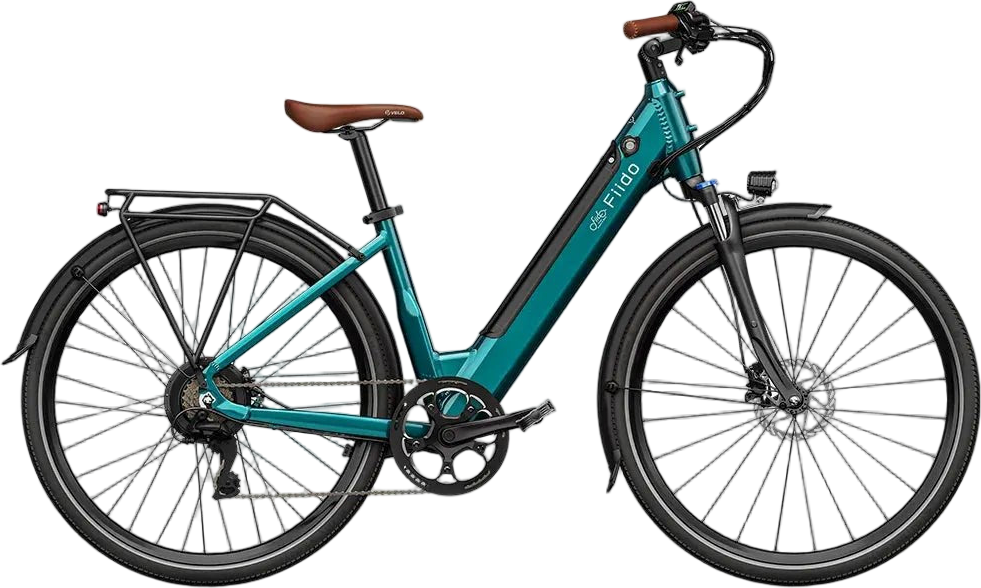
Fiido C11 Pro — Why Is the Fiido C11 Pro Becoming So Popular?

One of its biggest advantages is immediately obvious: the step-through frame.
For daily commuting, this shouldn't be underestimated. Think about a typical trip through Dublin. Traffic lights. Junctions. Pedestrian crossings. Cycle lanes. Shops. Office entrances. Bike racks. You're constantly stopping and starting. A lower step-through frame makes mounting and dismounting considerably easier than on a traditional high-frame bicycle. It can also be particularly convenient when you're wearing work clothes, carrying luggage or simply want a comfortable everyday bike.
The C11 Pro then adds another important feature: torque-sensing pedal assistance.
A basic cadence sensor largely detects whether the pedals are rotating. A torque sensor goes further by responding to how much pressure you're actually putting through the pedals. Pedal gently and assistance can respond gently. Push harder when accelerating or climbing and the system can respond accordingly. For riders coming from a conventional bicycle, torque sensing can make an electric bike feel more natural and connected to your own effort.
Fiido C11 Pro highlights: 250W electric-assist motor; assistance up to 25 km/h; torque-sensing assistance; 27.5-inch wheels; step-through frame; removable battery; manufacturer-quoted range up to approximately 104 km; practical city/commuter riding position; designed around everyday urban riding; suitable for qualifying Bike to Work Scheme purchases.
Fiido C11: The Value Alternative
Before comparing Fiido with ENGWE, it's also worth understanding the standard Fiido C11. The C11 follows essentially the same commuter philosophy. It provides a comfortable step-through format, removable battery and 250W electric assistance in a package aimed squarely at everyday transport. The current specification has a manufacturer-quoted maximum range of approximately 90 km under appropriate test conditions. For someone primarily interested in value, the C11 deserves consideration. For someone who particularly values a more refined pedal-assistance response, the C11 Pro and its torque-sensing system becomes more interesting.

ENGWE P275 SE — ENGWE Without the Huge Fat Tyres
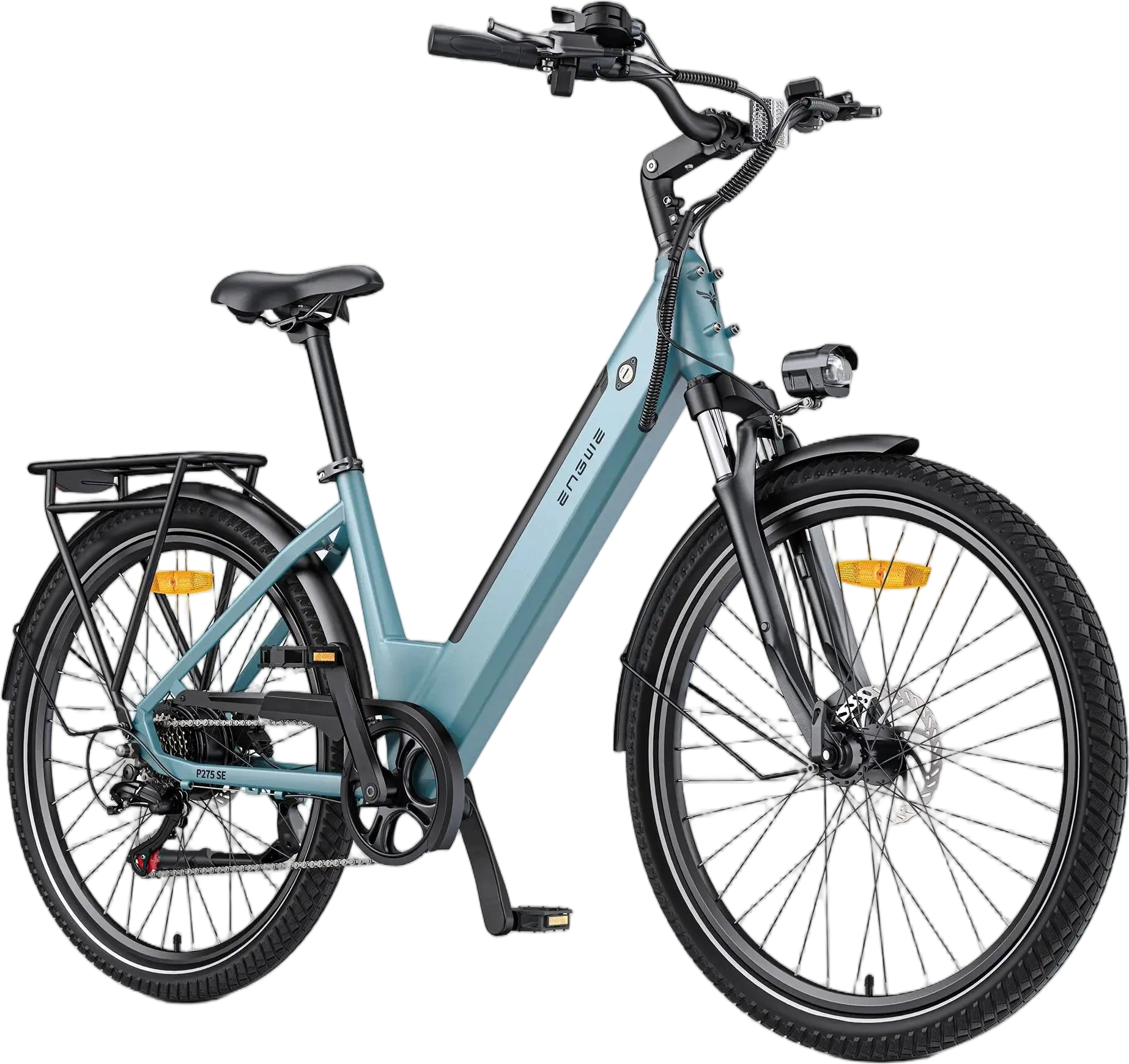
Mention ENGWE and many riders immediately picture one of the company's distinctive folding fat-tyre electric bikes. The ENGWE P275 SE is different. This is ENGWE entering much more conventional city-bike territory. And that makes it one of the fairest ENGWE models to put against the Fiido C11 Pro.
The P275 SE combines a 250W brushless motor with up to 55 Nm of torque and a torque sensor. Its removable battery is a 36V 13Ah unit, equivalent to approximately 468Wh. ENGWE quotes a maximum range of up to approximately 100 km under its specified test conditions.
It also comes with an important component for everyday commuters: hydraulic disc brakes. ENGWE specifies front and rear hydraulic disc braking on the P275 SE. For an e-bike being used regularly around traffic and in changing Irish weather, brakes deserve just as much consideration as battery capacity or motor figures.

ENGWE P275 SE highlights: 250W brushless motor; up to 55 Nm torque; assistance up to 25 km/h; torque sensor; 36V 13Ah removable battery; 27.5 × 1.95-inch tyres; Shimano 7-speed drivetrain; front and rear hydraulic disc brakes; manufacturer-quoted range up to approximately 100 km; approximately 24 kg; manufacturer-quoted 120 kg payload; IP54 factory water-resistance rating.
Face to Face
| Category | Fiido C11 Pro | ENGWE P275 SE |
|---|---|---|
| Category | Urban commuter | Urban commuter |
| Motor | 250W | 250W |
| Assistance | Up to 25 km/h | Up to 25 km/h |
| Pedal Sensor | Torque | Torque |
| Wheels | 27.5-inch | 27.5 × 1.95-inch |
| Battery | Removable | 36V 13Ah removable |
| Quoted Maximum Range | Approx. 104 km | Approx. 100 km |
| Frame | Step-through | Conventional commuter |
| Gearing | Multi-speed | Shimano 7-speed |
| Brakes | See current product specification | Hydraulic disc |
| Factory Water Protection | See current product specification | IP54 |
| Main Purpose | Urban / commuting | Urban / commuting |
Round 1: Everyday Commuting
The C11 Pro has a significant practical advantage for certain commuters: its step-through frame. If you're stopping repeatedly through city traffic, getting on and off a lower frame is convenient. The P275 SE takes a more conventional bicycle approach. Some riders actually prefer traditional frame geometry. For riders prioritising easy mounting and frequent stop-start city commuting, the C11 Pro's step-through layout deserves serious consideration. For riders who prefer a more conventional bicycle frame, the P275 SE may feel more familiar.
Round 2: Motor & Torque Sensor
This comparison is surprisingly close. Both use 250W motors and torque-sensing pedal assistance. And torque sensing is something we particularly like on commuter e-bikes. Rather than assistance simply appearing because the cranks have started rotating, a torque sensor can respond to the rider's actual input. That generally creates a more bicycle-like experience. You still have to pedal. The motor simply makes your effort go further.
Round 3: Battery & Range
Fiido quotes approximately 104 km maximum range for the C11 Pro. ENGWE quotes up to approximately 100 km for the P275 SE. Don't choose between them because one manufacturer claims four additional kilometres. Real-world range matters more. Ask yourself: How far is your return commute? Are there steep hills? What assistance level will you use? How much do you weigh? Will you carry panniers or work equipment? Can you charge the battery at work? Will you commute during winter? How strong are the prevailing winds on your route?
Both models having a removable battery is particularly useful. You can take the battery indoors for charging rather than having to bring the entire bicycle beside a socket.
Round 4: Braking
The P275 SE has a particularly attractive specification here. ENGWE specifies front and rear hydraulic disc brakes. Hydraulic braking can provide strong braking performance with relatively low lever effort. That's something worth considering on a bicycle that could be ridden five days per week through urban traffic. Customers considering the C11 Pro should check the current Lifty product page for the exact braking specification of the version currently being sold. Specifications can change between model years and production batches, so we prefer customers to rely on the current product listing rather than an old blog article.
Round 5: Irish Weather — This Matters
This is where an Irish comparison becomes different from a generic international e-bike review. We have rain. Lots of it. We have wet roads, road spray, damp mornings and rapidly changing weather. And an electric bicycle contains electrical components.
Is an e-bike waterproof? Never assume an e-bike is completely waterproof. Water resistance and waterproofing aren't the same thing. ENGWE currently specifies the P275 SE with an IP54 factory water-resistance rating. That's useful information, but IP54 does not mean you can submerge the bicycle, pressure wash it or ride through deep flood water. Likewise, the Fiido C11 Pro should never simply be assumed to be completely waterproof. This is particularly important if you're buying an e-bike through Bike to Work specifically because you intend to replace a car, bus or train commute throughout the year.
Lifty Electric Waterproofing / Wet-Weather Protection

For compatible electric bikes, Lifty Electric offers professional wet-weather protection upgrades. If you're planning to use your Fiido or ENGWE as a genuine year-round commuter in Ireland, this is an upgrade we recommend considering. Depending on the bicycle and selected service, our technicians can improve protection around compatible vulnerable electrical areas: electrical connectors; charging areas; wiring entry points; cable entry areas; controller/electrical housings; vulnerable electrical connections. Treatment depends on the construction and compatibility of the individual bicycle.
Which waterproofing level do we recommend? For a regular Irish commuter, we'd generally recommend discussing IPX5+ wet-weather preparation with the Lifty Electric Team. For riders expecting heavier year-round use and more demanding wet conditions, ask whether IPX6+ preparation is appropriate for your particular bicycle. Check the service page for the current available protection levels and prices before ordering.
Important: Waterproofing Doesn't Mean Submersible
We want to be completely transparent about this. Additional wet-weather preparation improves protection. It does not make an e-bike indestructible or suitable for underwater use. Even after receiving additional protection, avoid: deep standing water; flooded roads; rivers or streams; pressure washers; jet washing; prolonged unnecessary exposure; saltwater. A professionally prepared commuter still needs to be treated like an electrical bicycle.
Fiido C11 Pro + Waterproofing
This combination makes particular sense to us. The C11 Pro is designed around commuting. And if you're buying it specifically to commute throughout an Irish winter, additional wet-weather preparation is something worth considering at the time of purchase. Don't wait until you've spent months riding through rain and road spray before thinking about protecting the electrical system.
ENGWE P275 SE + Waterproofing
The P275 SE already has a documented factory IP54 rating. That's useful. But factory water resistance and additional Lifty wet-weather preparation are different things. If you're going to depend on the P275 SE throughout the year, ask our team whether additional protection is appropriate and compatible with the particular bicycle. This is especially worth discussing if you: commute five days a week; have no alternative transport when it rains; ride throughout winter; regularly encounter road spray; expect to keep the bicycle for several years.
What About the Bike to Work Scheme?
Both of these bikes represent exactly what makes Ireland's Bike to Work Scheme useful: practical transport. The scheme can provide tax advantages on qualifying purchases up to the applicable limits, subject to the current scheme rules and your individual tax position. But don't think only about the bicycle. Think about your complete commuting package. Depending on eligibility and the current scheme rules, your package may include qualifying cycling equipment such as: helmet; quality lock; lights; panniers; mudguards; pump; appropriate safety equipment. Lifty Electric can prepare an employer-ready Bike to Work quotation for eligible purchases.
Don't Forget E-Bike Assembly
Buying an electric bicycle online is different from buying a phone or laptop. A bicycle is a mechanical vehicle. Correct assembly and adjustment matter. Depending on how the bicycle is packaged, preparation may include: handlebars; pedals; front wheel; saddle; accessories; brake checks; gear adjustment; tyre pressure; fastener checks; final safety inspection.
Lifty Professional E-Bike Assembly — €99. Lifty Electric offers professional e-bike assembly for €99. If you'd prefer us to prepare and check your new e-bike, select our professional assembly service and arrange collection from Lifty Electric in Dublin.
Free E-Bike Delivery Anywhere in Ireland This September
We also have something special for customers ordering during September. Use voucher code SUPERSEPTEMBER on qualifying e-bike orders for FREE DELIVERY ANYWHERE IN IRELAND. That means whether you're in Dublin, Cork, Galway, Limerick, Waterford, Donegal, Kerry, Mayo or elsewhere in the Republic of Ireland, qualifying e-bike orders can receive free nationwide delivery during the promotion.
SUPERSEPTEMBERFiido vs ENGWE: Which Brand Is for You?
Fiido and ENGWE have increasingly broad ranges. Fiido has developed particularly attractive conventional commuter, lightweight and folding electric bicycles. ENGWE remains famous for folding and fat-tyre bikes but now also has increasingly conventional commuter models such as the P275 series.
Consider Fiido if… you particularly value a conventional bicycle experience, practical city-bike design and models such as the step-through C11 family.
Consider ENGWE if… you like ENGWE's approach and want anything from a conventional commuter such as the P275 SE through to the brand's distinctive folding and fat-tyre designs.
Other Fiido E-Bikes to Consider
Fiido Air: a more minimalist option for riders prioritising a cleaner, lighter city-bike format. Fiido C21: moves toward a sportier, e-gravel-inspired format. If the relaxed step-through position of the C11 isn't what you want and you prefer something more athletic, it's worth investigating.


Other ENGWE E-Bikes to Consider
ENGWE Engine Pro: demonstrates the other side of ENGWE. It's a substantially different proposition from the P275 SE, using the folding/fat-tyre format for which ENGWE became particularly well known. If storage, bike weight and manoeuvrability matter, compare those characteristics carefully against a conventional commuter before choosing.

Fiido C11 Pro vs ENGWE P275 SE: Our Final Advice
The interesting thing about this comparison isn't finding a universal winner. It's showing how two manufacturers solve the same commuting problem differently. The Fiido C11 Pro offers a particularly accessible step-through frame, torque-sensing assistance, removable battery and a design focused strongly on everyday urban riding. The ENGWE P275 SE combines a more conventional commuter frame with a 250W motor, torque sensor, removable battery, hydraulic disc brakes and documented factory IP54 water resistance. Both can make sense.
Before ordering, ask yourself: How long is my commute? Are there hills? Will I ride throughout winter? Where will I store the bike? Do I need to carry it upstairs? Do I prefer step-through or conventional geometry? Can I charge the battery at work? Will I ride regularly in rain? And importantly: Do I want additional wet-weather protection before I start commuting? For customers intending to use either bike as serious year-round transport in Ireland, we recommend considering Lifty Electric's waterproofing/wet-weather protection upgrade, subject to compatibility.
September Offer Recap
FREE E-BIKE DELIVERY ANYWHERE IN IRELAND, code SuperSeptember. Nationwide delivered e-bikes arrive boxed and require customer assembly. Professional e-bike assembly available from Lifty Electric for €99 for collection from our Dublin store.
SUPERSEPTEMBERLifty Electric
157 Capel Street, Dublin 1, D01 F5P1, Ireland
01 443 4946
www.liftyelectric.com