21 Bike to Work Questions Irish Employees Are Too Embarrassed to Ask HR
Including: "Can I buy a more expensive e-bike?", "Can I use it at weekends?", and "Do I actually have to cycle every single day?" All 21 statutory Revenue rules answered in plain English.

HR departments are wonderful people. But when it comes to the Irish Bike to Work Scheme, asking HR simple, practical questions can feel surprisingly intimidating.
You want to know if anyone checks your odometer. You want to know if you can take the bike down to Wicklow on a sunny Saturday without Revenue sending an audit team. You want to know if you can buy an e-bike that costs €2,200 when the statutory threshold says €1,500.
To save you a painful email chain with your benefits team, here are the 21 questions Irish employees actually care about—answered truthfully, without corporate jargon.
The 21 Questions Answered
Do I have to cycle to work every single day?
No. Nobody is standing outside your house on Tuesday morning with a clipboard.
Under Irish Revenue rules, the bicycle must be used primarily for qualifying journeys (commuting to work or travelling between workplaces). There is no statutory minimum number of days or mileage requirement. If you cycle two or three days a week and work from home or take the bus on others, you fully comply with the legislation.
Can I get an electric bike (e-bike)?
Yes. Electric bikes (pedelecs) are fully recognised and encouraged under the legislation.
To qualify, the e-bike must comply with European standard EN 15194: motor power up to 250W continuous, pedal-assist only (no throttle-only mopeds), and electric motor assistance that gently cuts off at 25 km/h. All commuter e-bikes supplied by Lifty Electric are 100% compliant.
What is the tax-exempt limit for a standard bike?
€1,250 for conventional pedal bicycles without electrical assistance.
This limit includes the bicycle and any qualifying safety accessories (helmet, lights, lock, etc.) purchased under the invoice.
What is the tax-exempt limit for an electric bike?
€1,500 for pedelec electric bicycles and associated safety equipment.
This represents an additional €250 allowance over traditional pedal bikes, reflecting the higher cost of lithium batteries and drive units.
What is the limit for a cargo or e-cargo bike?
€3,000 for purpose-built cargo and electric cargo bicycles.
To qualify for the €3,000 threshold, the bicycle must have a specially designed integrated frame with a permanent load-carrying platform or child-carrying box (e.g. Long John, Longtail, or front-loader designs).
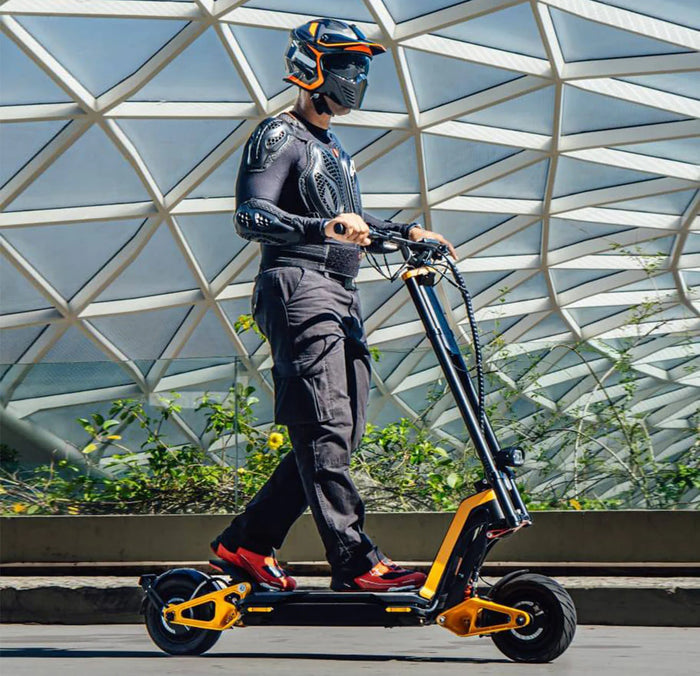
Can I get an electric scooter through the Bike to Work Scheme?
No. Electric scooters are strictly excluded from the Irish Bike to Work Scheme.
While electric scooters are legal on Irish roads under S.I. 199/2024 regulations, Irish tax legislation explicitly restricts salary sacrifice tax relief to pedal bicycles and pedelecs. If anyone offers you an e-scooter on Bike to Work, it violates Revenue rules.
Can I buy the bike myself and claim the money back from HR?
No. You must never purchase the bicycle directly with your personal card.
Revenue rules require that the employer purchases the bicycle from the retailer or scheme provider. If you pay the shop directly and ask your employer for reimbursement, the tax exemption is voided, and payroll must treat the payment as taxable benefit-in-kind.
Can a helmet and lock be included in the scheme?
Yes. Safety equipment is explicitly allowed under the legislation.
Eligible accessories include: cycle helmets, bells, bulb horns, front and rear LED lights, mirrors, mudguards, panniers, luggage carriers, straps, locks and chains (Sold Secure standard recommended), pumps, puncture repair kits, cycle multi-tools, and reflective clothing.
Can I buy a second-hand or used bicycle?
No. The statutory scheme applies strictly to new bicycles and equipment.
Purchases must be made through registered retail suppliers issuing formal commercial VAT invoices. Private sales and second-hand marketplace bikes do not qualify.
How often can I use the Bike to Work Scheme?
Once every four calendar years.
The restriction applies to calendar years, not 48 rolling months. For example, if you participated in June 2022, you become eligible again on 1 January 2026.
Does my employer have to participate?
Participation is voluntary for employers, but the vast majority of Irish companies offer it.
Because employers save their own 11.05% Employer PRSI contribution on the sacrificed salary, setting up the scheme saves the company money while providing a high-value employee benefit.
Can the salary deduction be spread over 12 months?
Yes. Up to a maximum period of 12 months (or 52 weekly / 26 fortnightly pay periods).
Some employers allow shorter terms (e.g. 3, 6, or 9 months), but 12 months is the standard across public and private sectors.
Does everybody save 52%?
No. Your tax relief matches your highest marginal tax rate.
If your annual income puts you in the higher tax band (above €44,000 for a single person in 2026), your combined income tax (40%), PRSI (4%), and USC (typically 4–8%) yield up to 52% relief. If you pay the standard 20% income tax rate, your relief is approximately 28–30%.
What if the e-bike I want costs €2,200?
You can still buy it! The first €1,500 receives full tax relief.
The remaining €700 is paid without tax exemption—either through non-exempt payroll deductions or by paying the balance directly to Lifty Electric. You still pocket the maximum legal tax saving of up to €780.
Can hybrid or remote workers use the scheme?
Yes. Hybrid workers are completely eligible.
If you work two days from home and commute to the office three days a week, those journeys qualify. Revenue does not mandate a five-day daily physical office commute.
Do I need to be an experienced cyclist or wear Lycra?
Absolutely not. You don't need Lycra, tiny sunglasses, or the ability to discuss watts over a macchiato.
Modern commuter e-bikes are built for everyday riders in regular workplace clothes. The electric motor does the heavy lifting up hills, meaning you arrive at your desk fresh and sweat-free without needing a shower.
Can I use the bike to travel to the Dart, Luas, or train station?
Yes. "Part-commutes" are explicitly recognised as qualifying journeys.
Cycling 3 km to your local Dart or Luas station, locking your bike, and boarding public transit fully satisfies the statutory purpose.
What happens if I change jobs before the 12 months are up?
Any remaining balance is deducted from your final net salary or redundancy settlement.
Once the final balance is cleared, the bicycle remains 100% your property—it does not stay with your former employer.
Does Lifty work with TravelHub, HubEx, and Cyclescheme?
Yes. Lifty Electric partners with all major Irish scheme administrators.
Whether your employer manages the scheme internally via proforma invoice or routes applications through TravelHub, HubEx, or Cyclescheme.ie, Lifty issues the exact documentation needed for instant approval.
How do I know which e-bike fits my height and route?
Check our curated guide or consult our Dublin workshop team.
Different commuters need different machines: step-through frames for effortless mounting, folding bikes for under-desk office storage, or heavy-duty mid-drive motors for steep climbs. Read our companion guide: 7 Questions to Answer Before Choosing Your E-Bike.
How do I start my Lifty Bike to Work application today?
It takes under two minutes:
- Browse our eligible electric bikes and select your preferred model and accessories.
- Submit a quote request on our Bike to Work quotation hub.
- We email you an official proforma quotation invoice with frame details.
- Forward the quote to HR, payroll, or upload it to your company portal.
- Once approved, Lifty completes a full Pre-Delivery Inspection (PDI) and dispatches your bike or has it ready for Capel Street collection!
Still Reading?
You probably don't need another Bike to Work article. You probably need a quotation to get the ball rolling with HR.
Our Dublin workshop team generates official proforma quotations same-day. No commitment, no paperwork headache, just clear figures.
Request My Official Quotation →Related Guides in This Series
- Your €1,500 Budget Is Bigger Than You Think — Real monthly take-home math and commute cost comparison.
- 7 Questions to Answer Before Choosing Your E-Bike — The anti-buyer's guide for smart commuters.
- Dear Dublin Traffic: We're Breaking Up — The commuter's guide to beating urban gridlock.